




Isolation of users and sensitive electronic components is an important consideration for motor control systems. Safety isolation is used to protect users from harmful voltages, while functional isolation is specifically designed to protect equipment and devices. Motor control systems may contain a wide variety of isolation devices, such as isolated gate drivers in drive circuits; isolated ADCs, amplifiers, and sensors in detection circuits; and isolated SPI, RS-485, and standard digital isolators in communication circuits. Careful selection of these devices is required, both for safety reasons and to optimize performance.
While isolation is an important system consideration, it has drawbacks: it can increase power consumption, transmitting data across isolation barriers creates delays, and it can increase system cost. System designers have traditionally turned to optical isolation solutions, which for many years were the best choice for system isolation.
In the last decade, digital isolators based on magnetic (transformer transfer) methods have provided a viable and in many cases superior alternative; from a system perspective, they also offer advantages that system designers may not have recognized. Two isolation solutions are described next, focusing on the improvements in delay timing performance that magnetic isolation offers, and the resulting benefits to motor control applications at the system level.
Isolation Methods
Optocouplers utilize light as the primary transmission method, as shown in Figure 1. The transmitting side consists of an LED with a high level signal turning the LED on and a low level signal turning the LED off.The receiving side utilizes a photodetector to convert the received light signal back into an electrical signal. Isolation is provided by a plasticized material between the LED and the photodetector, but can also be enhanced using an additional isolation layer (usually polymer based).

Figure 1. Optocoupler structure
One of the biggest drawbacks of optocouplers is that LED aging, which can drift the transmission characteristics; designers must consider this additional issue.LED aging causes timing performance to drift over time and temperature. As a result, signaling and rise/fall times are affected, complicating the design, especially given the issues that will be dealt with later in this paper.
The performance scaling of optocouplers is also limited. In order to increase data rates, the parasitic capacitance problem inherent in optocouplers must be overcome, which leads to higher power consumption. Parasitic capacitance also provides a coupling mechanism that causes optocoupler-based isolation devices to have inferior CMTI (common-mode transient immunity) performance to competing solutions.
Magnetic isolators (transformer-based) have been in large-scale use for more than a decade and are a valid alternative to optocouplers. These isolators are based on standard CMOS technology and utilize the magnetic transmission principle, with the isolation layer consisting of polyimide or silicon dioxide, as shown in Figure 2. A low-level current is transmitted in pulses through a coil, generating a magnetic field, which passes through the isolation barrier and induces a current in a second coil on the other side of the barrier. Due to the use of a standard CMOS structure, it offers significant advantages in terms of power consumption and speed, and does not suffer from the lifetime deviation problems associated with optocouplers. In addition, the CMTI performance of the transformer-based isolator is superior to that of the optocoupler-based isolator.
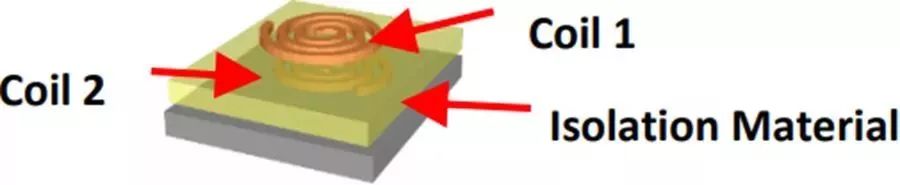
Figure 2. Magnetic transformer structure
Transformer-based isolators also allow the use of conventional signal processing modules (to prevent transmission of spurious inputs) and advanced transmission codec mechanisms. This allows for bi-directional data transmission, the use of different coding schemes to optimize power consumption versus transmission rate, as well as faster and more consistent transmission of critical signals to the other end of the barrier.
Comparison of Delay Characteristics
An important but often overlooked characteristic of all isolators is their transmission delay. This characteristic measures the time it takes for a signal, which can be a drive signal or a fault detection signal, to cross the barrier in either direction. The transmission delay varies greatly depending on the technology. Typical delay values are usually provided, but system designers are particularly interested in the maximum delay, which is an important characteristic to consider when designing a motor control system. Examples of transmission delay and delay deviation values for optocouplers and magnetically isolated gate drivers are given in Table 1.

Table 1: Typical delay characteristics of optocouplers and magnetic isolators
As shown in Table 1, magnetic isolation has significant advantages in terms of maximum delay and delay repeatability (deviation). As a result, motor control designers will have more confidence in their designs and will not need to add timing margins to meet gate driver characteristics. This has very important implications for the performance and safety of motor control systems.
System Implications for Motor Control Systems
Figure 3 shows a typical three-phase inverter used in an AC motor control application. This inverter is fed from a DC bus, where the DC supply is typically generated directly from the AC supply via a diode bridge rectifier and capacitive/inductive-capacitive filter. In most industrial applications, the DC bus voltage is in the range of 300
V to 1000 V range. A pulse width modulation (PWM) scheme is used to switch the power transistors at a typical frequency of 5 kHz to 10
kHz typical frequency to switch power transistors T1 to T6 to generate a variable voltage, variable frequency, three-phase sinusoidal AC voltage at the motor terminals.
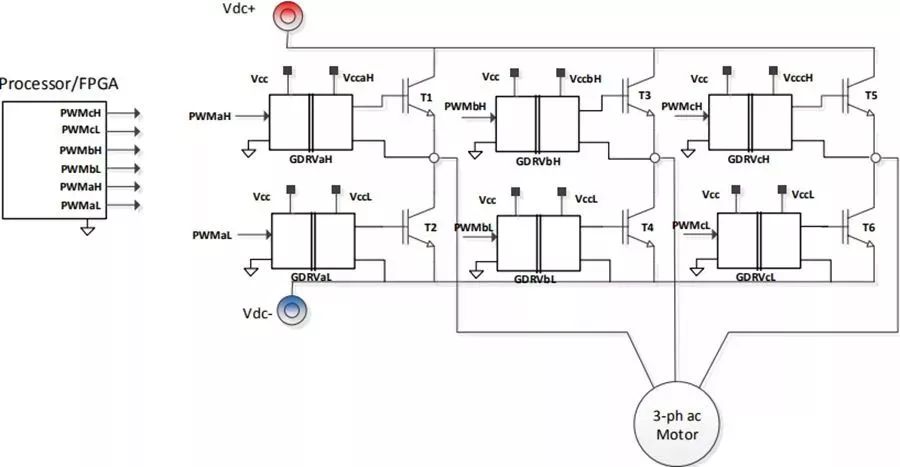
Fig. 3. Three-phase inverter for motor control applications
PWM signals (e.g., PWMaH and PWMaL) are generated in the motor controller (typically implemented with a processor and/or FPGA). These signals are typically low voltage signals that are common ground with the processor. In order to properly turn the power transistors on and off, the voltage level and current drive capability of the logic level signals must be amplified, and additionally level shifted so that the ground reference is at the emitting pole of the power transistor in question. Depending on the location of the processor in the system, these signals may also require safety insulation.
Gate drivers (such as GDRVaL and GDRVaH in Figure 3) perform this function. Each gate driver IC requires a primary-side supply voltage referenced to the processor ground and a secondary-side supply referenced to the transistor emitter. The voltage level of the secondary supply must be able to turn on the power transistors (typically 15
V) and have enough current drive capability to charge and discharge the transistor gates.
Inverter Dead Time
The power transistors have a finite switching time, so a dead time must be inserted in the pulse width modulation waveform between the upper and lower bridge transistors, as shown in Figure 4. This is to prevent both transistors from accidentally turning on at the same time, causing a short circuit in the high voltage DC bus, which in turn creates a risk of system failure and/or damage. The length of the dead time is determined by two factors: the transistor switching time and the gate driver transmission delay mismatch (including any drift from the mismatch). In other words, the deadtime must account for any difference in transmission time of the PWM signal from the processor to the transistor gates between the upper and lower bridge gate drivers.
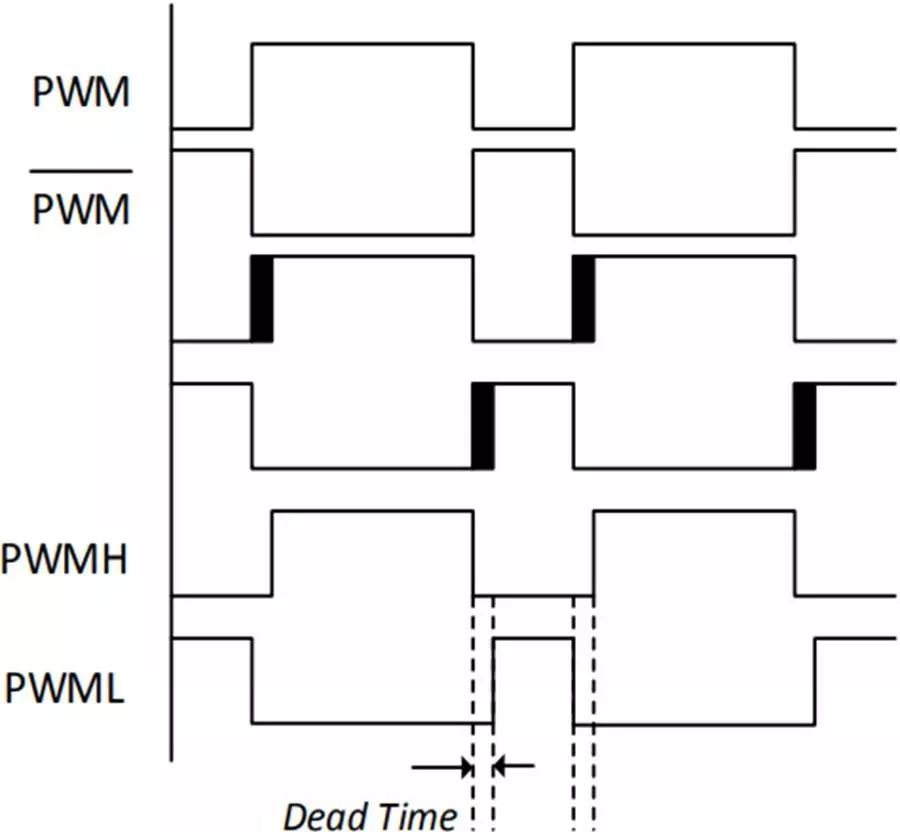
Figure 4. Dead time interpolation
Dead time affects the average voltage applied to the motor, especially at low speeds. In fact, dead time introduces the following error voltages of approximately constant magnitude:
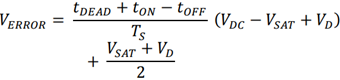
Where VERROR is the error voltage, tDEAD is the dead time, tON and tOFF are the transistor turn-on and turn-off delay times, TS is the PWM switching period, VDC is the DC bus voltage, VSAT is the on-state voltage drop of the power transistor, and VD is the diode conduction voltage.
When a phase current changes direction, the error voltage changes polarity, so that when the line current crosses zero, the motor interline voltage undergoes a step change. This causes harmonics in the sinusoidal fundamental voltage, which in turn generates harmonic currents in the motor. This is a particularly important issue for the larger, low-impedance motors employed in open-loop drives, where harmonic currents can be significant, leading to low-speed vibration, torque ripple, and harmonic heating.
Dead time has the most serious effect on motor output voltage distortion under the following conditions:
High DC bus voltage
Long dead time
High switching frequency
Low-speed operation, especially in open-loop drives where no compensation is added to the control algorithm
Low-speed operation is important because it is in this mode that the applied motor voltage is in any case very low, and the error voltage due to dead time can be a significant fraction of the applied motor voltage. In addition, the effect of distortion jitter due to the error voltage is even more detrimental because the filtering of the system inertia is only available at higher speeds.
Of all these parameters, the dead time length is the only one affected by the isolated gate driver technology. Part of the dead time length is determined by the switching delay time of the power transistor, but the rest is related to the propagation delay mismatch. In this respect, optical isolators are clearly inferior to magnetic isolation technology.
Application Examples
To illustrate the effect of dead time on motor-electrical distortion, results are given below for an open-loop motor drive based on a three-phase inverter.
The inverter gate driver uses a magnetic isolator from ADI Corporation
(ADuM4223ADuM4223) to directly drive IR's IRG7PH46UDPBF1200VIGBT with a DC bus voltage of 700 V. The inverter drives a three-phase induction motor in open-loop V/f control mode. The line voltage and phase currents are measured separately using a resistive voltage divider and shunt resistor in combination with an isolated ∑-∆ modulator (also from ADI's AD7403). The unit data streams output from each modulator are sent to a control processor
(ADI's ADSP-CM408) where the data is filtered and extracted to produce accurate representations of the voltage and current signals.
The measured line voltage output from the sinc digital filter is shown in Figure 5. The actual line voltage is a high switching frequency waveform at 10kHz, but it is filtered out by the digital filter in order to show the low frequency portion of our interest. The corresponding motor phase currents are shown in Figure 6
Shown.
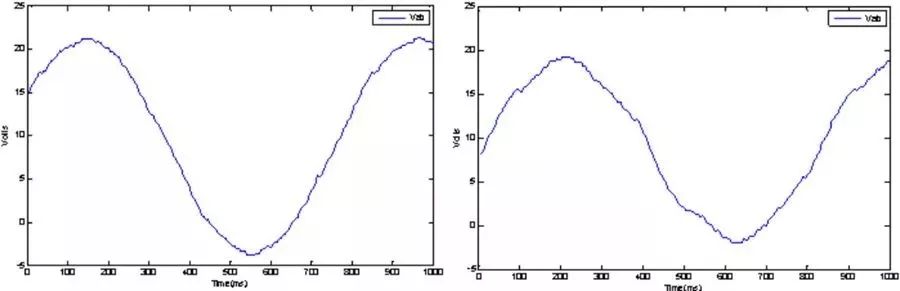
Fig. 5. Measured interline motor voltage: (left) 500 ns dead time; (right) 1 µs dead time
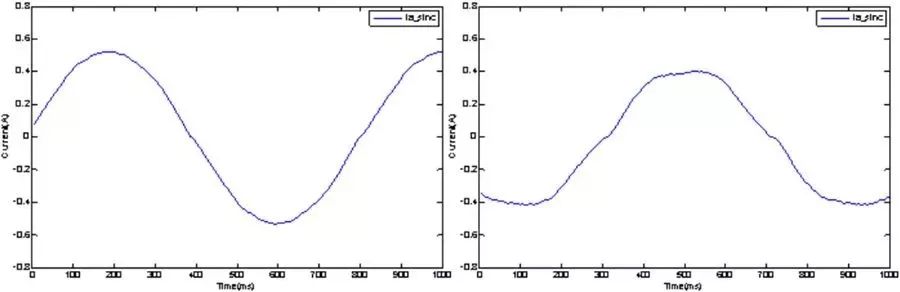
Figure 6. Measured motor currents: (left) 500 ns dead time; (right) 1µs dead time
The ADuM4223 gate driver has a transmission delay mismatch of 12ns, so that the absolute minimum deadtime required for IGBT switching can be used. For IRIGBTs, the minimum deadtime can be set to 500 ns. As can be seen in the figure on the left, the voltage distortion in this case is minimal. Likewise, the phase currents are well sinusoidal, so the torque ripple is minimal. The right graph shows the line voltage and phase current when the deadtime is increased to 1µs. This value is more representative of the needs of an optically coupled gate driver with greater propagation delay mismatch and drift. There is a significant increase in both voltage and current distortion. The induction motors used in this case are relatively small, high impedance motors.
In higher power end-use applications, the induction motor impedance is typically much lower, resulting in increased motor current distortion and torque ripple. Torque ripple can have detrimental effects in many applications, such as reduced elevator ride comfort or bearing/coupling wear in mechanical systems.
Overcurrent Shutdown
Another important issue for modern gate drivers is how fast the shutdown command from the processor can be realized on the IGBT. This is important for overcurrent shutdown in situations where the overcurrent detection is not part of the gate driver itself, but is implemented as part of the detection and filtering circuitry. Another pressure in this area is the shortening of the short-circuit withstand time of more efficient IGBTs. In this regard, the trend in IGBT technology is to reduce the short-circuit withstand time from the industry standard of 10µs to 5µs or even less. As shown in Figure 7, overcurrent detection circuits typically require a few microseconds to latch on to a fault; steps must be taken to reduce this detection time in order to keep up with the overall trend. Another major factor in this path is the propagation delay from the processor/FPGA output to the IGBT gate (gate driver).
Again, magnetic isolators have a clear advantage over optical devices due to the fact that the propagation delay values of the former are very small, typically around 50ns, and are no longer an influencing factor. In contrast, the propagation delay of an optocoupler is in the order of 500ns and accounts for a significant portion of the total timing budget.
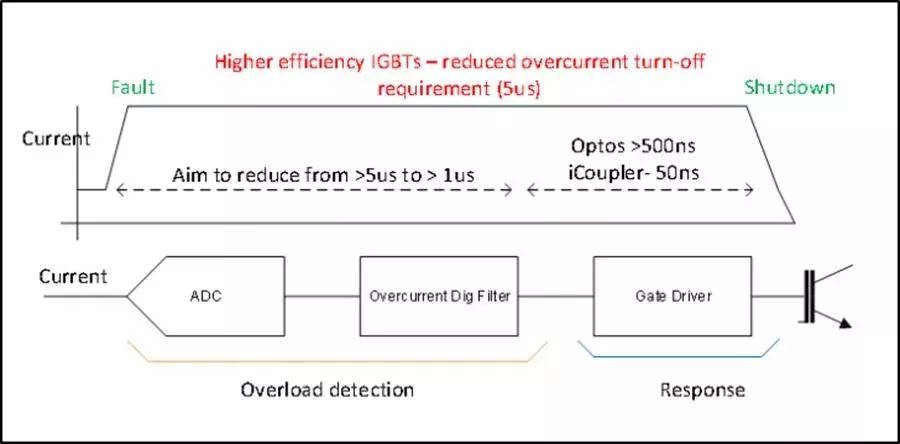
Figure 7. fault shutdown timing
The gate driver shutdown timing for a motor control application is shown in Figure 8, where the processor shutdown command follows the IGBT gate emitter signal. The total delay from the start of the shutdown signal until the IGBT gate driver signal approaches 0 is only 72 ns.
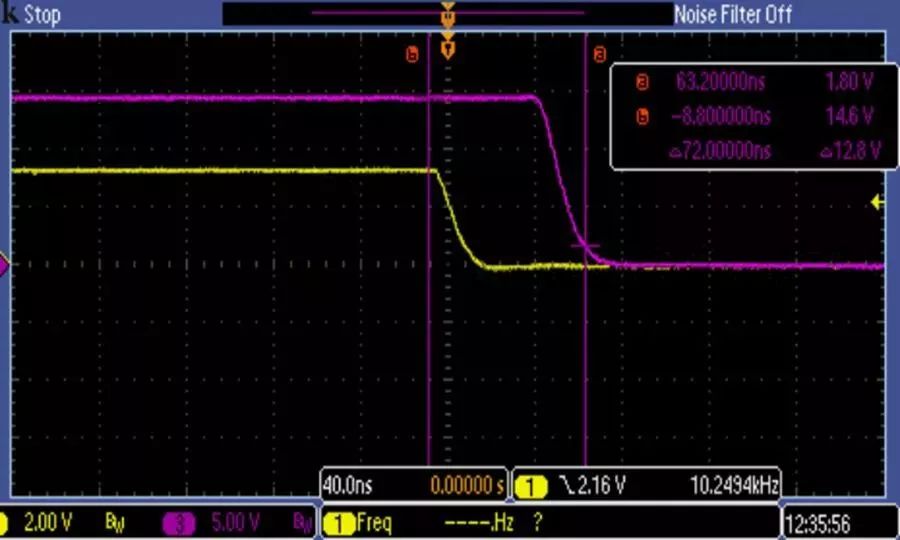
Figure 8. Overcurrent Shutdown Gate Driver Timing
Summary
With increased focus on system performance, efficiency, and safety, motor control architects face increasingly complex challenges in designing robust systems. While optocoupler-based gate drivers are the traditional choice, transformer-based solutions are not only more advantageous in terms of power consumption, speed, and time stability, but also, as discussed in this paper, in terms of system performance and safety due to shorter signal delays. This allows designers to confidently reduce dead time and improve system performance while preventing the upper and lower bridge switches from turning on at the same time.
In addition, it supports faster response to system commands and errors, which again enhances system reliability and improves safety. Given these advantages, transformer-based isolated gate drivers have become a major option for motor control system design; system designers are strongly advised to make device latency an important requirement when designing their next project.