

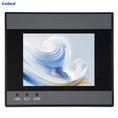
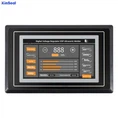


Industrialcontrollers arecomputer systemsdesigned specifically forindustrialenvironments with a high degree of reliability, stability and real-time performance to meet the needs of automated control in industrial production processes.
Overview of industrial controllers
1.1 Definition of industrial controller
Industrial controller is a computer system designed specifically for industrial environments, which has a high degree of reliability, stability and real-time, and is able to meet the demand for automated control in the industrial production process. Compared with traditional general-purpose computers, industrial controllers are specially designed and optimized in terms of hardware and software to adapt to the harsh conditions and high requirements of industrial environments.
1.2 Features of Industrial Controllers
1.2.1 High reliability
Industrial controllers are designed with full consideration of the harsh conditions of the industrial environment, such as high temperature, high humidity, high vibration, etc. High-quality components and strict production processes are used to ensure the stability and reliability of the system.
1.2.2 Real-time
Industrial controllers have a high degree of real-time, able to respond to external events in milliseconds or even microseconds, to meet the demand for real-time control in the industrial production process.
1.2.3 Powerful Data Processing Capability
Industrial controllers are usually equipped with high-performance processors and large-capacity memory, which can quickly process a large amount of data to meet the demand for data processing in the industrial production process.
1.2.4 Rich interfaces
Industrial controllers have rich interfaces, such as RS232, RS485, Ethernet, etc., which can be easily connected and communicated with various sensors, actuators and other devices.
1.2.5 Easy to expand and upgrade
The industrial controller has good expandability and upgradability, and can flexibly add or replace hardware and software modules according to the actual demand.
Composition of Industrial Controller
2.1 Hardware Composition
2.1.1 Processor
The processor of the industrial control machine usually adopts high-performance embedded processors, such as ARM, MIPS, PowerPC, etc., with high processing speed and low power consumption.
2.1.2 Memory
The memory of industrial control machine includes RAM and ROM, in which RAM is used to store running programs and data, and ROM is used to store system software and application programs.
2.1.3 Input/Output Interface
The industrial controller has abundant input/output interfaces, such as serial interface, parallel interface, Ethernet interface, USB interface, etc., which can be easily connected and communicated with various external devices.
2.1.4 Power supply module
The power supply module of industrial controller usually adopts switching power supply, which has high efficiency and stability and can adapt to the voltage fluctuation of industrial environment.
2.1.5 Heat dissipation system
The heat dissipation system of industrial controllers usually adopts fans or heat sinks to ensure the normal operation of the system in high-temperature environments.
2.2 Software Components
2.2.1 Operating System
Industrial controllers usually use real-time operating system ( RTOS ), such as VxWorks, QNX, FreeRTOS, etc., with high real-time and stability.
2.2.2 Control Software
The control software of industrial control machine usually includes PLC programming software, SCADA software, motion control system software, etc., which is used to realize the control and management of industrial equipment.
2.2.3 Communication protocols
Industrial controllers support a variety of communication protocols, such as Modbus, Profibus, CANopen, etc., which can easily communicate and exchange data with other industrial equipment.
Application areas of industrial controllers
3.1 Manufacturing
Industrial controllers are widely used in manufacturing industry, such as automated production lines, robot control, CNC machine tools, etc., which can improve production efficiency and product quality.
3.2 Power industry
Industrial controllers are mainly used in the electric power industry for the monitoring and management of power generation, transmission and distribution, such as substation automation system, grid scheduling system and so on.
3.3 Petrochemical industry
Industrial controllers in the petrochemical industry are mainly used for monitoring and control of the production process, such as oil refineries, chemical plants DCS system.
3.4 Transportation industry
Industrial controllers are mainly used in the transportation industry for traffic signal control, vehicle monitoring, intelligent transportation systems, etc.
3.5 Environmental protection industry
Industrial controllers in the environmental protection industry are mainly used for monitoring and management of sewage treatment, waste gas treatment, solid waste treatment and other environmental management projects.
The development trend of industrial controllers
4.1 Integration
With the development of technology, industrial controllers are moving toward integration, integrating multiple functions in one device to reduce system complexity and cost.
4.2 Intellectualization
Industrial control machine is gradually developing in the direction of intelligence, through the introduction of artificial intelligence, machine learning and other technologies to achieve intelligent optimization of the production process and decision-making.
4.3 Networking
Industrial control machine is developing in the direction of networking, through the integration with the Internet, Internet of Things and other technologies, to achieve remote monitoring, diagnosis and maintenance.
4.4 Greening
With the improvement of environmental protection awareness, industrial controllers are developing in the direction of greening, adopting low-power consumption and low-radiation components and designs to reduce the impact on the environment.
4.5 Safety
The security of industrial controllers is getting more and more attention, by using encryption technology, firewalls and other means to ensure the security of the system and the confidentiality of data.