


RS-485, as a widely adopted serial communication standard in industrial control, smart buildings, and other fields, is highly valued for its stability and interference resistance. However, in practical applications, RS-485 systems may still experience communication failures due to various factors. This article systematically analyzes common fault phenomena, diagnostic methods, and solutions for RS-485 networks, helping engineers quickly identify and resolve issues.
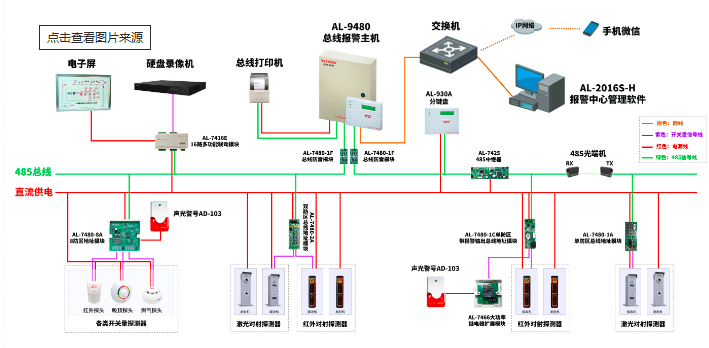
I. Typical Fault Symptoms and Diagnostic Process
When communication anomalies occur in an RS-485 system, they typically manifest in the following ways:
1. Complete communication failure: No data exchange between nodes.
2. Intermittent communication interruptions: Connections drop and re-establish, with high error rates.
3. Partial node disconnection: The master station cannot access specific slave stations.
4. Data corruption: The receiving end parses erroneous information.
A layered diagnostic approach is recommended:
1. Physical layer inspection: Use a multimeter to measure the voltage between the AB lines (normal range: -7V to +12V) and the termination resistor value (typically 120Ω).
2. Signal quality analysis: Observe signal waveforms with an oscilloscope to check for overshoot, ringing, or distortion.
3. Protocol layer verification: Capture raw data using monitoring equipment and analyze whether message structures comply with application layer protocols like Modbus.
II. Common Fault Causes and Solutions
(A) Wiring Errors
1. Reversed Polarity: Swapping A/B wire order causes signal reversal. Solution: Exchange A/B wire positions, ensuring uniform standards across all nodes.
2. Missing Termination Resistor: Long-distance transmission (over 100 meters) without termination resistors causes signal reflection. Action: Install 120Ω resistors at both bus ends, avoiding over-installation.
3. Excessive Branch Length: Star topology or overly long branches (recommended maximum 1 meter) cause impedance discontinuity. Optimization: Switch to daisy-chain topology; use RS-485 hubs if necessary.
(B) Abnormal Electrical Characteristics
1. Excessive Common-Mode Voltage: Voltage differences between AB wires and ground exceeding ±7V may damage transceivers. Countermeasures:
● Inspect the grounding system to ensure all nodes share a common ground.
● Install isolated RS-485 modules (e.g., ADM2483).
● Use chips with ±25kV ESD protection (e.g., SN65HVD72).
2. Power Supply Interference: Manifested as communication accompanied by power fluctuations. Solutions:
● Provide dedicated power supply for the 485 module.
● Add a Pi-type filter at the power input.
● Use a DC-DC isolated power supply module.
(C) Environmental Interference
1. Electromagnetic Interference (EMI): Equipment like inverters and high-power motors can generate noise. Countermeasures:
● Switch to shielded twisted-pair cables (e.g., AWG22 standard cable).
● Ground the shield at a single point.
● Maintain a minimum 30cm distance from high-voltage lines.
2. Lightning Surges: Outdoor lines are susceptible to lightning strikes. Recommendations:
● Install a three-level protection system comprising gas discharge tubes (e.g., 3RM090-8) and TVS diodes.
● Use lightning-protected terminal blocks (e.g., Phoenix Contact UT series).
(D) Equipment Malfunctions
1. Transceiver Damage: Manifested as insufficient transmit signal amplitude (normally >1.5V). Diagnosis:
● Disconnect all nodes and test individually.
● Verify chip power supply pins (typically 5V or 3.3V).
2. MCU Interface Anomalies: Inspect TX/RX signals at the UART port using a logic analyzer, ensuring consistency in baud rate, data bits, and other parameter settings.
III. Advanced Diagnostic Techniques
1. Impedance Testing: Employ a TDR (Time Domain Reflectometer) to precisely locate circuit breaks or short circuits with sub-meter resolution.
2. Eye Diagram Analysis: Generate eye diagrams using a high-speed oscilloscope. Optimize the line when the eye height is <200mV or the eye width is <0.3UI.
3. Protocol Analyzer Application: Use tools like Wireshark with a USB-to-485 adapter to decode Modbus RTU/TCP protocols and identify abnormal frames.
IV. Preventive Maintenance Recommendations
1. Regularly inspect connector oxidation; gold-plated terminals are recommended for industrial environments.
2. Measure line insulation resistance quarterly (should be >10MΩ).
3. Use fiber optic converters (e.g., MOXA MC-1120) for backup channels to achieve electrical isolation.
4. Implement dual-bus redundancy design for critical systems.
V. Typical Failure Case
A sewage treatment plant's aeration control system experienced random communication interruptions:
1. Symptom: Modbus communication between PLC and VFD failed 3-5 times daily.
2. Troubleshooting:
● Oscilloscope revealed 200kHz high-frequency noise in the signal.
● Discovered that the 485 lines were routed in the same cable tray as the 380V power cables.
3. Resolution:
● Re-routed the lines through dedicated metal conduit.
● Replaced with double-shielded cable (inner aluminum foil + outer copper mesh).
● Added ferrite core filtering.
4. Outcome: Zero faults during 6 months of continuous operation.
Through systematic fault diagnosis methods and targeted solutions, the vast majority of RS-485 communication issues can be effectively resolved. In practical operations, establishing standardized test procedure documentation and equipping a basic diagnostic toolkit (including multimeter, portable oscilloscope, terminating resistor, etc.) is recommended to significantly enhance maintenance efficiency. For complex industrial environments, evaluating more robust alternatives such as Profibus DP or CAN bus is also a worthwhile consideration.