




Highly automated systems that continuously collect process control data are increasingly common in today's manufacturing plants. These autonomous systems provide precise real-time position control through accurate information gathered by sensors. Magnetic encoders, proximity sensors, pressure transmitters, motors, and other devices ubiquitous in automated factories all require advanced position sensing to collect plant-level data and enhance performance.
Not to mention robotic systems, this demand for position sensing is virtually ubiquitous in any system requiring high-performance motion control. Position sensing technology largely determines the upper limits of a system's performance. Accurate, fast, and reliable position measurement is the prerequisite for achieving real-time precision control.
Motion Control Applications of 3D Hall Effect Position Sensing
Compared to other position sensing technologies, Hall effect position sensing is arguably the most widely adopted choice in industrial automation applications. Linear 3D Hall-effect position sensors monitor motor shafts, with sensor parameters directly impacting system control, bandwidth, and latency. To avoid compromising system performance through trade-offs between data throughput and measurement error, 3D Hall sensors integrate ADCs. These utilize precision signal chains to achieve high-accuracy, low-drift magnetic field measurements, followed by system-level drift compensation using on-chip temperature sensor data.
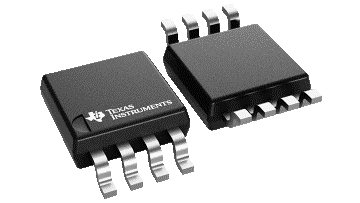
The ability of 3D Hall-effect position sensors to accommodate any combination of magnetic axes and temperatures is a highly valued feature in current industrial applications. Maintaining excellent sensing performance across broader magnetic field detection ranges and wider ambient temperature ranges enables these sensors to excel in complex industrial environments. Examples include TDK's flexible architecture configurable HAL 39xy series sensors, TI's SPI-configurable TMAG5170 series of high-precision linear 3D Hall-effect sensors. These sensors offer flexibility for magnetic and mechanical design in motion control applications through selectable magnetic sensitivity ranges and temperature compensation options. The previous misconception about the inflexibility of magnet placement when using Hall-effect sensors is now eliminated.
Looking at the two devices mentioned above, TDK's HAL 39xy series sensors feature a powerful DSP and an embedded microprocessor, while TI's TMAG5170 series incorporates an on-chip angle calculation engine, eliminating the need for off-chip processing. Flexible Hall sensor front-end configurations also facilitate a wider variety of applications. In motion control applications, the advancement of these 3D Hall-effect position sensors now unlocks numerous possibilities for automation systems.
Anisotropic Magnetoresistance Effect Position Sensing (AMR) in Motion Control Applications
The Anisotropic Magnetoresistance Effect involves the anisotropic scattering of s-orbitals and d-orbitals within materials. AMR sensors exhibit a magnetoresistance ratio (ΔR/Rmin) around 3%. AMR sensing finds extensive applications in motion control, particularly in automotive-grade motion control systems. Major manufacturers are developing AMR-based magnetic sensing solutions, as AMR sensors play an increasingly critical role in automotive-grade motion control.
Unlike the linear displacement measurement of Hall sensors mentioned above, AMR sensors generally offer higher precision. They also reduce torque ripple. High accuracy is a key metric for magnetic sensors. Technologically, AMR sensors typically feature very low power consumption, fast response times around 10ns, and temperature drift near 3000 PPM/K. Specific accuracy varies depending on the manufacturer's process and configuration.
The dual-channel AMR sensing ADA457X series from ADI, featuring integrated signal conditioning amplifiers and ADC drivers, exhibits a typical angular error of just ±0.1° with output noise as low as 850μV rms. Infineon's single-AMR sensor TLE5109A16 series also achieves a typical error of ±0.1° across the 10 mT to >500 mT range; Domestic manufacturer Duowei's latest AMR sensor has achieved an absolute accuracy of 0.1°.
When an AMR sensor operates under saturated conditions, its output signal remains unaffected by variations in the absolute magnetic field strength, demonstrating robustness in high-magnetic-field environments and providing ample margin for the entire system.
Additionally, for AMR sensors and other magnetic sensing technologies, another consideration is the extent to which the device is affected by parameter degradation and its sensitivity to magnet aging. This issue also depends on each manufacturer's strategy. NXP's approach involves integrating the AMR sensor's magnetic resistance sensor bridge, mixed-signal integrated circuit (IC), and required capacitors within a single package. Both integrated channels operate completely independently, a fully isolated design that is virtually unaffected by parameter degradation. Each manufacturer employs distinct approaches, all striving to minimize the impact of parameter degradation.
Summary
For motion control applications in automation systems, magnetic sensing also encompasses GMR and TMR technologies. From a technical standpoint, these offer higher precision than AMR, though they present greater technical challenges and are mastered by fewer manufacturers. They find more extensive use in automotive applications.
For motion control applications, achieving superior control performance necessitates precise position sensing. Within its measurement range, AMR sensing delivers outstanding sensitivity and response time, enabling highly accurate position measurement. Precision linear 3D Hall-effect sensors also hold their own, achieving fast, accurate, and reliable measurements without compromising performance or increasing power consumption and cost.