





The concept of robots is already very broad. This article focuses on servo motors for robotic joints used in the industrial automation sector and does not cover integrated servo motors for service robots.
Industrial robots are broadly classified into linear robots (also known as Cartesian robots), multi-degree-of-freedom robots (also known as multi-joint robots), parallel robots (also known as Delta robots), and horizontal multi-joint robots (also known as SCARA robots). An "automation cell" consists of various types of articulated robotic arms and automated conveying equipment. Automation cells with different functions are linked to form an automated production line, and multiple automated production lines are combined to create an automated workshop.
Among these industrial robots and automated units, servo motors play a critical role in accurately, promptly, and reliably positioning mechanical structures according to control commands; therefore, they are considered core components.
Basic Concepts of Permanent Magnet Servo Motors
"Servo" refers to the ability to execute commands from a control computer system without deviation. This concept is not limited to electric motors or hydraulics; it encompasses pneumatic systems as well, and any component capable of performing this task is considered a servo component.
An electric motor is an electromechanical component that converts electrical energy into mechanical energy. A servo motor is an electric motor designed for use in motion control systems, where its output parameters-such as position, speed, acceleration, or torque-are controllable.
Servo motors can be classified into different types based on their control specifications. By power supply type, they are divided into AC servo motors and DC servo motors; by operating mode, they are categorized into linear servo motors and rotary servo motors. Linear motors directly generate Newtonian force, while rotary motors output rotational torque. To drive linear loads, rotary motors require mechanical mechanisms such as lead screws to convert rotational motion into linear motion.
Rotary AC servo motors are classified into AC asynchronous servo motors and AC synchronous servo motors based on rotor structure. The rotor of an AC asynchronous servo motor consists of an aluminum or copper cage, and the cage's rotational speed always maintains a certain speed difference relative to the synchronous rotating magnetic field. Under vector control technology, this type of motor can achieve torque control characteristics as precise as those of DC motors. However, the rotor features high inertia, good constant-power characteristics, and a wide speed range, making it suitable for a wide range of variable-inertia loads such as machine tool cutting and printing machinery winding/unwinding applications. The disadvantages are low starting torque, and their electromagnetic response speed is inferior to that of permanent magnet servo motors. The electromagnetic time constant is approximately 10 times that of permanent magnet motors made from permanent magnet materials. Furthermore, due to low power density and large rotor dimensions, they are not suitable for high-dynamic servo applications.
Rotary AC synchronous servo motors use permanent magnet materials for their rotors, which directly generate the excitation magnetic field. There is no need for an excitation current to establish the motor's magnetic field, resulting in a fast electromagnetic response. Furthermore, the high energy density of current rare-earth permanent magnet materials enables high power density in these motors, opening up possibilities for designing servo motors with various performance characteristics. High dynamic response can be achieved through a slender design with low rotor inertia or a compact, robust design with high rotor inertia. The use of rare-earth permanent magnet materials has established permanent magnet motors as the preferred choice for servo applications. However, rare-earth permanent magnet materials remain the most expensive component among all materials used in servo motors. Differences in the materials used by various manufacturers result in varying levels of product quality. High-quality permanent magnet materials may not demagnetize even at operating temperatures above 150°C, whereas inferior materials may demagnetize when the motor's operating temperature is below 120°C. The quality of the permanent magnet materials directly determines the various characteristics of the servo motor.
Linear servo motors directly output Newton-meters of force without requiring mechanical conversion, enabling very high acceleration. In recent years, rapid technological advancements have led to their widespread use in the feed axes of high-performance machine tools. In industrial robots, however, their application is limited to certain linear robotic arms and is not the focus of this article. This article focuses on rotary permanent magnet servo motors and their applications in industrial robots.
Structure of a Rotating Permanent Magnet Motor
Figure 1 shows a typical structural diagram of a permanent magnet servo motor. To provide a comprehensive overview, this single diagram is intended to clearly illustrate the entire structure of a permanent magnet servo motor. In fact, low-power permanent magnet servo motors rated at 15 kW or less can rely on natural convection for cooling, eliminating the need for a cooling fan. These motors are compact and do not require mounting feet; installation rings are also unnecessary. Replacing the terminal box with an aviation connector for the lead wires results in a cleaner design. Consequently, the motor's appearance becomes as shown in Figure 2(a). If the motor is very small-under 1 kW-even the aviation connectors for the lead wires are unnecessary; instead, a cable can be directly extended from the motor, resulting in the configuration shown in Figure 2(b).
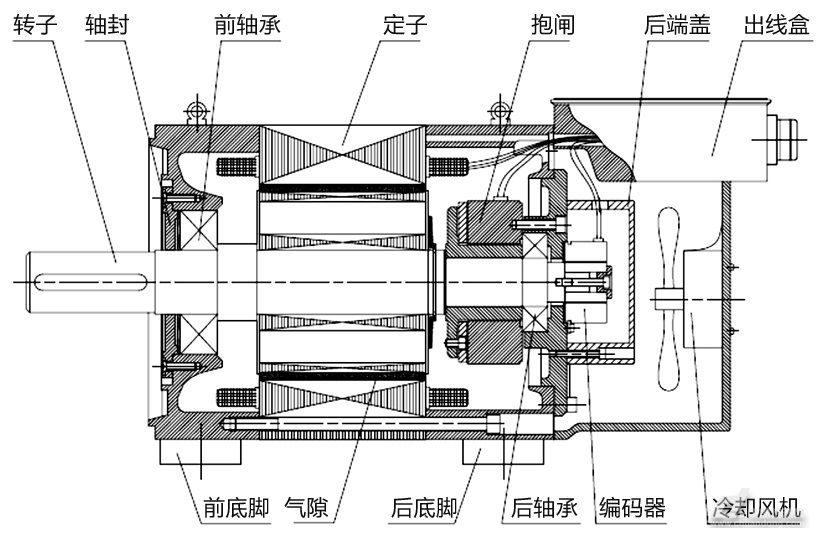 Figure 1: Schematic diagram of a permanent magnet servo motor
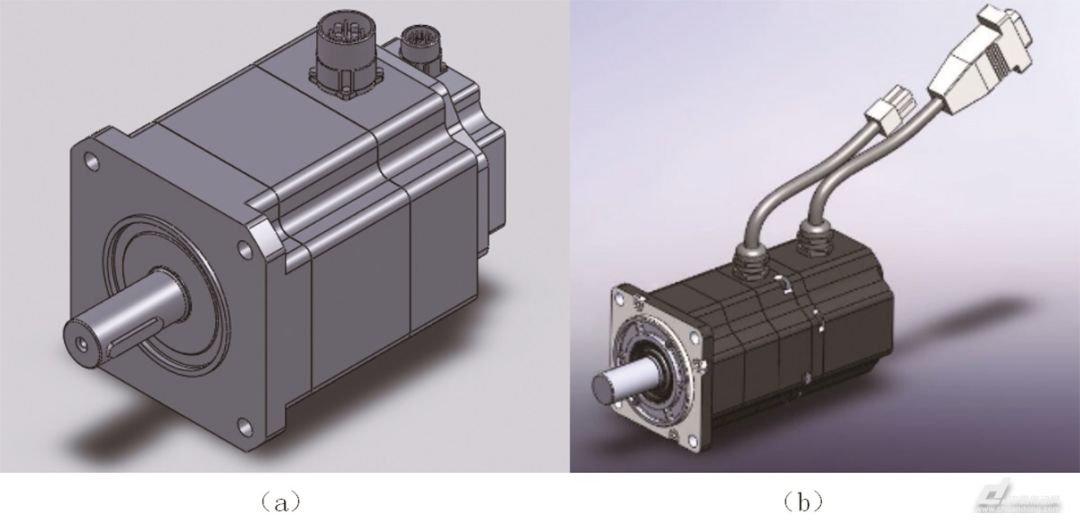
Figure 2: Schematic diagram of a low-power permanent magnet servo motor
This section assumes that the reader understands the principles of electric motors and focuses solely on explaining the structural differences between permanent magnet servo motors and other types of motors based on the characteristics of robot motors.
Bearings: The service life of a servo motor is closely tied to its bearings. Given the high reliability and durability requirements of robots, the bearings must ensure a service life of at least 30,000 hours. Based on an 8-hour workday, this translates to a robot service life of at least 10 years. The bearings must be capable of intermittent operation at 6,000 rpm.
Stator laminations and windings: Since robot motors require high power density, and to minimize size and reduce iron loss heat generation, the lamination material must be cold-rolled silicon steel with a thickness of 0.35 mm or less. The windings must withstand long-term exposure to 16 kHz variable-frequency carrier pulses. To prevent breakdown and withstand intense dv/dt surges, the voltage withstand rating must be no less than 2,500 V.
Rotor Permanent Magnet Material: The permanent magnet material is the most expensive component in a permanent magnet servo motor. Materials with low rare earth element content have a low Curie point and poor material stability. If neodymium-iron-boron (NdFeB) magnets are used, they should preferably be of UH42 grade or higher. Additionally, attention must be paid to the content of rare earth elements such as dysprosium. To ensure high-temperature demagnetization resistance, samarium-cobalt (SmCo) magnets are also widely used in small and medium-sized servo motors. In summary, it is essential to ensure that the servo motor remains truly demagnetization-resistant under normal operating conditions. Otherwise, the long-term stability of the robot cannot be guaranteed.
Shaft Seals: To prevent oil and debris from entering the motor while ensuring smooth operation, installing a shaft seal at the motor shaft end is a standard design practice. In robots, a small gear is often milled onto the servo motor shaft to connect the motor directly to the reducer. Since high temperatures and oil can enter the motor, multi-lip high-temperature shaft seals are required. For example, a double-lip fluorocarbon rubber shaft seal is more reliable than a single-lip nitrile rubber shaft seal, though the cost difference is significant.
Brake: A brake is a standard feature for robot motors. Nearly 95% of servo motors require a brake. To ensure the brake engages at all times-especially during emergency stops-it must operate reliably. The brake must have a sufficient safety factor, with a static torque of approximately 1.5 times the motor's rated torque. For heavy-duty robot motors, the safety factor for the brake should reach 2.0 or even 2.5 times the rated torque. It is important to note that the brake on a robot motor is a safety brake, not a service brake. The control system must ensure that, during an emergency stop, the servo drive's braking circuit is activated via a braking resistor, and the brake engages when the motor speed approaches zero. To improve response speed, permanent magnet brakes are superior to electromagnetic spring brakes.
Encoder: The encoder is mounted at the rear end of the motor and functions as a sensor for motor speed and rotor position. It measures the rotor's position to provide the control computer with data on the rotor's actual position and speed for servo control, magnetic field positioning, and motion trajectory calculation. While robot motor encoders generally do not offer high precision, they must support multi-turn absolute position measurement to ensure that the motor can resume operation from the position it was in before a power failure. Currently, there are three common approaches to addressing robot motor encoder requirements. The first method uses a Gray code optical or magnetic encoder for single-turn measurement and mechanical gears for multi-turn measurement. The advantage of this approach is high measurement accuracy; after a power outage, the motor's operating position is retained via the encoder's mechanical position and can be directly read upon power-up. However, the disadvantage is that the encoder is too thick, making it excessively long for limited installation spaces. The second method uses an optical or magnetic Gray code encoder to store single-turn data, while multi-turn data is stored via a battery-powered electronic memory. This allows the encoder to be made very short, making it ideal for small servo motors with an outer diameter of less than 60 mm. The drawback is that the battery life is relatively short-typically 2–3 years at most, and in some cases, the battery needs to be replaced after just one year. The third method uses a rotary transformer to measure single-turn position for applications with low precision requirements, while multi-turn information is handled by a battery-powered circuit board inside the control box.
Rotor Shaft Extension: Due to frequent forward and reverse operation, the motor is subjected to shear forces; therefore, the shaft material should preferably be 42CrMo tempered steel. If the motor is installed with a key, the key must be fully seated to effectively reduce the motor's dynamic balance and runout. At high speeds, the runout difference between a keyed servo motor and a bare shaft under no-load operation can be as much as nine times greater-a factor that should not be underestimated.
Key Transmission Parameters of Permanent Magnet Servo Motors
Operating Zone: The region where the motor can operate continuously without exceeding the allowable temperature rise is called the continuous operating zone; the region outside the continuous operating zone where short-term operation is permitted is called the intermittent operating zone. The operating zone is represented by a two-dimensional coordinate plane of torque and speed.
Rated Power PN: The maximum power the motor can output within the continuous operating zone.
Rated Torque MN: The torque at which the motor delivers its rated power within the continuous operating zone. Definitions of rated torque vary significantly among manufacturers. Corresponding heat dissipation conditions are generally specified. Internationally, it is common practice to specify that this rating is measured with the motor mounted on an aluminum flange of a defined area and thickness, with the flange temperature maintained at 20°C or below a specified temperature. Therefore, in actual operation, motors are often mounted on cast iron components, and summer temperatures may exceed the test standard. If no margin is allowed during operation, this can lead to overheating and demagnetization. The standard condition of 40°C ambient temperature specified by the Chinese national standard is relatively reasonable for the Chinese environment. Reputable manufacturers will include a certain design margin below the rated values determined according to the standard when publishing the rated torque, which is safer.
Rated Current IN: The current corresponding to the rated torque.
Rated Speed nN: The maximum speed at which the motor is permitted to operate under rated torque within the continuous duty cycle.
Continuous Locked-Rotor Torque MO: The maximum torque the motor can deliver when locked in the continuous duty cycle. Generally, speeds below 100 rpm are considered to fall within the locked-rotor operating range.
Continuous Locked-Rotor Current I0: The current corresponding to the continuous locked-rotor torque.
Peak Torque Mmax: The maximum torque the motor is permitted to output. Nominal conditions vary significantly among different manufacturers. Some specify the torque corresponding to the demagnetizing current; such specifications should not be used as the peak torque. Mechanical designers must allow for sufficient margin to prevent the motor from demagnetizing and failing due to excessive operating torque. If the maximum torque is specified according to the duty cycle, it has engineering reference value. The peak torque specified according to S3-10% has the greatest engineering reference value; it can be understood as the maximum operating torque allowed for a continuous operating time of 3 seconds, which is sufficient for robots. The repetitive overload for multi-joint robots is generally around 2.0 times.
Peak current Imax: The operating current corresponding to the peak torque.
Electrical time constant Te: A characteristic constant representing the speed at which current responds to an applied voltage. It is defined as the time required for the current to reach 1 - e^(-1) (approximately 63.2%) of the final current after a fixed voltage is applied across the motor terminals. The electrical time constant of a servo motor is generally specified as the ratio of the stator winding's inductance to its resistance (Te = L/R). It is related to the current step response time of the servo system but is not necessarily equivalent to it.
Mechanical time constant Tm: The mechanical time constant of a servo motor is defined as: tm = R*J/Ke*Kt, i.e., it is related to the winding resistance, rotor moment of inertia, motor back-EMF coefficient, and motor torque coefficient. The mechanical time constant of a drive motor is approximately equivalent to the time required for the motor to accelerate from zero speed to 63.2% of its steady-state speed under no-load conditions. In a servo system, this constant may be numerically equivalent to the system's speed-loop step response time.
Back-EMF constant Ke: The no-load back-EMF value induced by the motor at a unit speed. It typically refers to the no-load back-EMF corresponding to 1000 rpm, with units of V/krpm.
Torque constant Kt: The motor's output torque corresponding to a unit current. The relationship between the motor's back-EMF coefficient Ke and the torque coefficient Kt is generally given by Kt = 9.55 * Ke * 1.732, where Kt is in Nm/A, Ke is in V/rpm, and Ke = Kt. Here, Ke refers to the line back-EMF.
If the motor specifications do not provide Kt and Ke parameters, Kt can be derived from the rated torque and rated current. Then, using the relationship Kt = 9.55 * Ke * 1.732, the line back-EMF coefficient Ke can be indirectly derived as follows: Ke = 0.1047 * Kt / 1.732, with units of V/rpm; Alternatively: Ke = 104.7 × Kt / 1.732, with units of V/krpm or mV/rpm.
Due to power supply voltage limitations, the motor's back EMF is typically designed to be relatively low to ensure high responsiveness, guaranteeing sufficient voltage drop at high speeds to obtain adequate current. However, high current increases the motor's thermal load. Consequently, robot motors require a high power density to achieve compact size, high torque, and low heat generation.
Rotor Moment of Inertia J: The moment of inertia of the motor rotor. The moment of inertia of a robot motor is critical, as it directly affects the stability of the robot's operation. This is because robots often involve multi-axis coordination. For example, the second axis of an articulated robot requires a motor with significant inertia to accommodate the substantial changes in load inertia that occur when the arm extends and retracts.
Tooth-slot torque: When the windings of a permanent magnet motor are open-circuited, a periodic torque is generated during one revolution of the motor due to the slots in the armature core, which tend to align with positions of minimum magnetic resistance.
Overload Capacity: The ability of a motor to deliver a specified power or torque for a defined period under specified conditions without exceeding the specified peak current. Typically, the ratio of peak current to rated current is referred to as the current overload factor, while the ratio of peak torque to rated torque is referred to as the torque overload factor. Generally, robot motors must ensure a torque overload capacity of approximately 3 times.
Maximum Speed nN: The highest speed the motor can achieve during intermittent operation. Definitions of maximum speed vary significantly among motor manufacturers; for robot motors, the value provided typically represents the highest speed at which repeatable operation is possible during actual use. At maximum speed, the corresponding maximum torque can exceed twice the rated torque, ensuring acceleration response across the entire speed range.