

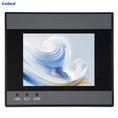
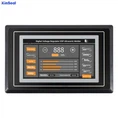


Industrial systems have consistently been a key driver in advancing automation capabilities and complexity levels. These systems now incorporate advanced standardized computing technologies and network connectivity, contributing to significant productivity gains and delivering value-added features that optimize shop floor operations.
While considerable progress has been made in human-machine interface (HMI) technologies and systems-which provide greater access to fundamental plant and operational data-there is no one-size-fits-all solution when matching HMI capabilities to industrial automation application requirements. This is because selecting the right tablet design-from mounting options and screen size to processor performance and I/O-becomes increasingly critical as automation capabilities expand to monitor and process a wider variety of complex tasks. Furthermore, specific regulatory compliance requirements and industry standards must be considered for applications in niche markets, such as the energy, marine, or food industries, where customization is essential.
Ultimately, the ability to deliver fully customized tablets expands the options for designing low-cost, high-value industrial systems, contributing to the automation industry's viability and positive progress. This article outlines the most sought-after features in the latest tablet designs and how HMI system development is best served when suppliers possess the expertise to offer customizable options.
Customization Aligns with Automation Trends
Analysts predict industrial automation growth will be driven by manufacturing IoT (Internet of Things) implementation. This will combine with increased R&D investment to meet rising demands for energy-efficient manufacturing operations and growing emphasis on regulatory compliance. As more companies seek to implement IoT-enabled applications and Industry 4.0, there is also increasing demand for industrial systems and HMIs that integrate plant and shop floor operations with other business functions like logistics and customer service. Features such as enhanced control and operational efficiency, expanded interfaces and interoperability, networking, remote monitoring, and increased data access lay a solid foundation for realizing IoT.
To further streamline manufacturing processes, HMIs must also support real-time data analytics within industrial automation workflows. The shift toward smart factories connects previously isolated systems, making them cornerstones of IoT. This high demand for equipment interoperability drives the need for more technologically advanced products.
Customizing HMI designs with next-generation processors and display touchscreen technology enables companies to implement connected, unified dashboard solutions. These help overcome the difficult and time-consuming task of manually analyzing and controlling production-level operations across disparate platforms. Connected HMI systems deliver greater value when they provide the ability to share data and monitor factory processes in real time.
Furthermore, HMI systems are tasked with meeting the need for simplified, more intuitive operation. Breakthroughs in tablet technology include consumer-like multi-touch interfaces.
For instance, the use of Projected Capacitive (PCAP) touch panel technology is particularly well-suited for industrial automation. PCAP employs hardened or tempered glass, enhancing resistance to external environmental threats. This reinforced glass provides users with superior scratch, impact, and shock resistance, thereby increasing durability.
The tablet industry is advancing rapidly, with a significant increase in devices utilizing touch panels and a broader range of new products and processes. Touchscreens deliver simplified, multifunctional control and functionality by replacing buttons and switches with software menus. This enhanced level of control also improves the precision and accuracy of production management. Furthermore, the increased computational power of modern tablets supports complex, detailed data analysis and real-time control.
Supporting Broader I/O Requirements
HMIs offering extensive I/O capabilities or expansion boards for customized I/O serve as the glue binding today's solutions for controlling machines and sensors, connecting to the cloud, or integrating with analytics software. Leveraging the expanded I/O available in modern HMIs enables operators to manage factory production more seamlessly and effortlessly.
The increasing complexity of automation tasks and the volume of data requiring access necessitate extensive connectivity across every area of an organization. To support the diverse interfaces in industrial applications, modern tablets must offer connectivity matching automation demands. Vendors with advanced integration capabilities provide comprehensive options for GbE; USB 3.0/2.0; and RS232, RS485, and RS422 communication ports. The growing prevalence of wireless communication also necessitates tablet support for 3G/4G, LTE, WiFi, CAN, and RFID. Effective connectivity must further support diverse edge devices requiring high processing power and scalable storage to manage computationally intensive data processing applications.
The growing adoption of multi-screen technology demands new tablet designs support video and graphics ports, including dual-channel LVDS displays. Certain designs may also require application-specific expansions, which can be addressed through the single mini PCI Express slot now available in newer tablets. Supporting ever-expanding I/O requirements, the latest tablets now offer a wide range of operating systems, performance levels, memory, and storage capabilities.
Designed for Longevity
A key differentiator between commercial-grade and industrial-grade tablets in HMI applications is the ability to deliver extended operational lifespans, as most industrial systems run continuously for 5 to 7 years or longer. This necessitates extensive product testing by suppliers to ensure extended longevity and reliability, along with full validation of industrial-grade tablets-a process that can take up to six months.
For tablet suppliers employing a modular approach, customizing HMIs for the long lifecycles demanded by industrial markets is easier. Modular panel PC designs offer configuration flexibility to meet diverse application requirements, including the ability to select or upgrade processor performance, display size, and touch panel technology types, or add backplanes to satisfy I/O needs.
The brightness of tablet screens and whether systems are fanless or fan-cooled are critical factors in predicting the Mean Time Between Failures (MTBF) of HMI systems, with many customers demanding an MTBF of 50,000 hours. Fanless systems with more efficient screen backlights enable operators to achieve longer MTBF. For more demanding operational requirements, glass touch panels must meet additional shock and vibration specifications while providing comprehensive dust, moisture, or water resistance. One solution embeds the touch panel glass display within an aluminum housing. Another design recommendation for extended longevity involves sealing the tablet's front surface, creating a more robust industrial solution with a completely flat glass front. These options also offer developers a range of solutions catering to diverse budget parameters. Greater choice enables more companies to adopt HMI applications for enhanced monitoring and control of factory floor data, thereby helping achieve manufacturing productivity goals.
Depending on the application, tablets must operate within an industrial temperature range of -20°C to 70°C, significantly exceeding the operating temperatures of consumer products. When reliable, uninterrupted performance is essential, it is best to choose proven, rugged, and validated components that have been tested to meet protection requirements for dust, contamination, and electromagnetic compatibility (EMC). Standard-based solutions also ensure long-term protection of technology investments while reducing development costs for specific application designs. OEMs and system developers wisely seek experienced partners for tablet customization.
Achieving Market and Application-Specific Goals
Access to data enabling informed analysis within industrial organizations enhances cost efficiency and drives continuous process improvement. HMIs providing a more comprehensive view of production processes can extract critical insights from SCADA and Manufacturing Execution System (MES) monitoring applications. These advanced HMIs make the Industrial Internet of Things (IIoT) a reality, empowering organizations to maximize productivity by implementing the latest smart automation applications.
Highly integrated and standardized components in modern tablets ensure seamless and simplified interoperability with other devices on the factory floor and throughout the manufacturing organization. The multi-touch display technology features of Panel PCs further enhance usability and user experience, enabling valuable single points of access.
The industrial market often demands swift action to implement automation systems that strike the right balance between performance, durability, and functionality. This is why selecting a knowledgeable manufacturing partner with proven customization expertise is crucial-one that will help reduce risks and development time for interoperable and scalable hardware solutions.