


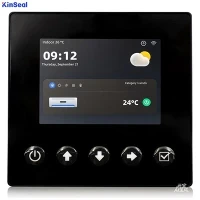


In a world of ever-increasing efficiency, it is not surprising to find that most of the conveniences we take for granted are being accomplished through automated processes. With human operators requiring minimal attention, machines are performing important tasks such as analyzing data, performing operations, and working in concert with each other.
As a result of advances in industrial automation, systems such as SCADA are being combined with components such as PLCs and HMIs to increase productivity, convenience, and improve safety in hazardous conditions.
Today, hundreds of critical facilities utilize SCADA and PLC systems that almost always have HMIs. these processes are critical when it comes to handling automation and advanced system design. These systems will only improve. The use of SCADA is expected to grow nearly 7 percent by 2024, with more and more manufacturers adopting this more efficient approach.
But because some of these systems have similar features and functionality, it's important to understand how they differ and how they function specifically for your industry's needs.
Quick Breakdown of SCADA, HMIs and PLCs
SCADA systems are necessary for industrial automation functions. Like computers, these complex systems can analyze information, record data, and perform tasks without much human help.
Supervisory Control and Data Acquisition Systems
Supervisory Control and Data Acquisition, or SCADA, is an automated control process that is used by many large industries for industrial automation, such as manufacturing, construction, and engineering facilities.
SCADA is a two-part system:
- PLC (Programmable Logic Control)
- RTU (Remote Terminal Unit)
Often, SCADA will also have a separate component called an HMI (Human Machine Interface). In a nutshell, SCADA is a system with both software and hardware elements for controlling processes, interacting, and monitoring and logging data through PLCs and HMIs.
Human Machine Interface
An HMI is a user interface or dashboard that allows a human operator to interact with a machine. HMIs are used worldwide in a wide range of technologies, from smartphones to power plants.
HMIs are not part of specific software, but are used for people to communicate with a machine or device.HMIs are primarily used to help users understand and control data with fingertip touch through a communicable device, for example:
- screen (TV, computer or movie)
- Buttons
- Levers
- Computer Mouse
- Keyboard
SCADA systems can be operated without an HMI, although an HMI is often recommended. so that operators can understand how to communicate with the system and receive notification of any errors that need to be resolved.
Programmable Controllers
Programmable logic controllers are often described as microcomputers that can communicate with different objects, systems and machines. They are designed to control and troubleshoot networks, which is why they are a necessary component of SCADA.
The system simplifies the use of machines while still providing the necessary functionality and is used in any situation where a human operator is needed for highly reliable control. Additionally, they are an intricate part of industrial automation, without which a SCADA system cannot function.
Some of the main functions of PLCs in SCADA include:
- Robotics
- assembly line
- Counter
- Measuring
- Computing
- Sensors
- Motors
- Lamps
- Fans
- Circuit Breaker
The Important Role of Industrial Automation
Industrial automation is the use of multiple control systems to operate machines and equipment. This varies greatly between many types of industries, such as manufacturing plants and control systems for buildings, transportation, and communications.
This type of process is powerful and uses computers and machines to work instead of humans, with minimal attention to operators. Therefore, some of the main benefits of automated systems include:
- Increased productivity because machines can run tirelessly
- Improve product quality by producing the same amount each time
- Reduce labor costs by replacing workers with machines
- Reduce routine inspections by having PLCs and HMIs working in tandem
- Improve safety by taking workers out of hazardous environments
When it comes down to it, automation is an excellent way to accomplish important procedures with minimal human intervention. Although used in different forms, this method has been used by humans for centuries.
A Brief History of Automation
Although Ford Motor Company coined the term "automation" in 1948, the process can be traced back to ancient Egypt. In fact, one of the first feedback control mechanisms dates back to 270 BC!
Over the next few centuries, mankind searched for ways to make work easier. With the harvesting of food, the building of houses, and the introduction of the Industrial Revolution, there were hundreds of ways to make life more practical. Throughout the 1800s, people experienced the first automatically operated machines, such as furnaces, engines, and thermostats.
As time jumped into the 20th century, people made heavy use of electricity and industrial automation was in full swing. Industrial automation is slightly more complex than the automation people have known for years; it is the control and use of various systems to operate equipment such as machines.
Today, there is a high demand for products, supplies, and necessities such as transportation and power production. One of the easiest ways to meet these demands is to use industrial automation. These complete systems help to control these major parts of life and these require effective systems such as SCADA, PLC and HMI.
How SCADA, HMI and PLC work together in industrial automation?
In today's world, there is so much technology to keep up with. So while it may sound overwhelming to understand exactly how a complex system like SCADA works, it is a simple chain of information. Remember, SCADA systems are designed to:
- Automate processes and procedures
- Track and analyze data and errors
- Perform remote site monitoring
- Increase productivity and ensure the same quality output
But how do SCADA, PLCs and HMIs work together?
SCADA is best understood as the centralized database that stores and controls the entire operation. This communicates with the PLC, which is how the system runs and communicates within the operating environment. If there is an HMI, it may be in the form of a screen, button, lever, or keyboard that allows a human to interact with the SCADA-PLC system. Some examples include factory machines, computers, and vehicles.
In industrial manufacturing, the HMI is critical to providing information to the operator.The PLC system identifies any problems within the SCADA system and presents them to the operator through the HMI so that the problem can be resolved.
Manufacturing Facilities
There are countless industries that use automated systems, but some of the most popular are:
- Food, such as livestock, grains, fruit and vegetable preserves and packaging
- Beverages and tobacco, such as bottled water, soda, alcohol, cigarettes and cigars
- Textiles, such as apparel fabrics, bedding, towels, and draperies
- Wood products, such as lumber, plywood, veneer, flooring and home building materials
It's safe to say that goods are in demand all over the world, which in turn means that the need for productivity is higher than ever. To help meet these demands, manufacturing facilities are turning to industrial automation systems, which help increase productivity and consistently produce high-quality products.
Electric Power Generation
With the steady increase in electricity consumption around the world, there is a high demand for automated power generation. Although these facilities need to be operated manually, more output can be distributed thanks to automated systems such as SCADA.
Food and Retail
If you've been to a McDonald's fast food restaurant lately, then you've probably noticed the newest addition to their store: the ordering kiosk. With this automated touchscreen ordering system, productivity has increased, which means less wait time for consumers and more time for employees to focus on their work.
But McDonald's isn't the only company using automated systems. In any given restaurant or grocery store, you may find examples of these systems, for example:
- Conveyor belt systems
- Online shopping options
- Self-checkout machines
- Drone deliveries
Another prime example of a SCADA system in retail is automated banking. Thanks to ATMs, people can withdraw cash from their checking accounts at any time. These systems use SCADA, PLCs and HMIs to work together.
Travel and transportation systems
Operators rely heavily on automated systems when controlling and monitoring transportation procedures, for example:
- airplanes
- air traffic control
- Steering ships
- trains
- Mechanical diversions
- GPS trackers and devices
- Timed Lights at Intersections
The operator will use the HMI, which can be a combination of screens, levers, buttons and keyboards.
Conclusion
Industrial automation is changing the way the world works. More than ever before, machines are able to manipulate and process data to increase productivity, reduce labor costs, and decrease human interaction so that output is consistent.