





Pneumatic motors are now widely adopted in China's industrial automation sector due to their safety and explosion-proof properties, stepless speed regulation, and high flexibility in application. They are particularly suited for environments where electric motors are unsuitable, such as high-temperature, humid, or flammable and explosive conditions.
Selecting the right pneumatic motor depends on four key factors: ① Power; ② Torque; ③ Speed; ④ Air consumption. Based on your operational requirements and intended use, you can first estimate the motor's required power, torque, and speed. Pay particular attention to torque and speed. Combine this estimation with the theoretical knowledge above to choose the most suitable pneumatic motor for your specific application, considering power, torque, speed, and usage demands. The diagram below illustrates the relationship between motor output power, torque, and rotational speed for technical reference. When operating pressure remains constant, rotational speed, torque, and power all vary with changes in external load. Starting from the supply pressure point on the curve, observe the upward trajectory of the power, torque, and air consumption curves.
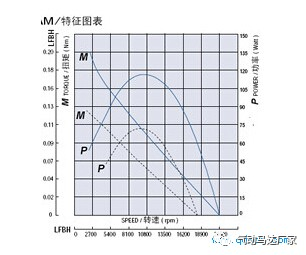
This example demonstrates how power output decreases when supply pressure drops. Air must be supplied through appropriately sized tubing to minimize any potential pressure drop in the control circuit.
Throttling
The most common method to reduce the speed of a pneumatic motor is to install a flow control valve at the inlet. For reversible motors, the inlet can also serve as the exhaust port. Flow control is also applied to the main inlet, but note that speed adjustment should be moderate. Unrestricted speed variation will adversely affect the motor's power and efficiency.
Pressure Regulation
Speed and torque can also be adjusted by installing a pressure reducing valve upstream of the air supply. When low-pressure air is continuously supplied to the motor and the motor decelerates, very low torque is generated at the output shaft. Working Torque As load increases, the pneumatic motor stops-this is the holding torque. When load decreases, the motor resumes operation without burning out, a key feature of pneumatic motors. Due to lubrication and friction, starting torque is typically 75-80% of holding torque. The graph shows motor power peaks at approximately half the rotational speed. Therefore, within appropriate limits, reducing motor speed can achieve maximum power and torque while conserving air consumption. However, for higher torque requirements, selecting a motor with corresponding power remains necessary.
Air Supply for Pneumatic Motors
Air supplied to the motor must be filtered, pressure-reduced, and treated with oil mist. The simplest solution is to install a three-piece air filter assembly at the motor's inlet. Compressed air supply must utilize sufficiently large pipes and valves to ensure the motor's maximum torque. At all times, the motor requires a supply pressure of 6 bar to 7 bar. When pressure drops to 5 bar, power decreases to 77%, and at 4 bar, power is reduced to 55%.