



In the era of Industry 4.0, the integration of advanced technologies is fundamentally transforming the way industrial operations are conducted. In the process of achieving seamless operations, the Human-Machine Interface (HMI) is an indispensable key component. HMI plays a crucial role in smart manufacturing and industrial automation, enabling operators and engineers to interact with machines, systems, and related processes. So, what exactly is HMI? Why is it so important in modern manufacturing?
Definition of HMI
A Human-Machine Interface (HMI) is a user interface or dashboard that connects operators or users with machines, equipment, and control systems in an industrial environment. It serves as a communication bridge between humans and machines, enabling users to efficiently monitor and control the operation of automated systems.
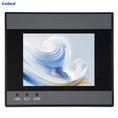
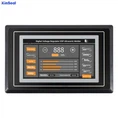
HMI systems typically consist of graphical displays, touchscreens, and input devices such as buttons or keyboards. These systems can be simple standalone devices or complex networked solutions capable of controlling intricate manufacturing processes.
The Role of HMI in Smart Manufacturing
Smart manufacturing is characterized by data, sensors, cloud computing, and real-time analysis, which enhance production efficiency, flexibility, and decision-making capabilities. HMI plays a crucial role in this transformation, enabling operators to interact with the vast amounts of data collected from machines, sensors, and other automated systems.
1. Monitoring and Visualization
One of the primary functions of HMI is to provide real-time data visualization. It allows operators to monitor key performance indicators (KPIs), production metrics, machine status, and alerts. Through intuitive graphical representations such as charts, dashboards, and maps, operators can quickly identify issues, track progress, and make informed decisions.
2. Control and Interaction
Through the HMI system, users can send commands to machines or automated systems. Operators can adjust settings, start or stop processes, modify variables, and perform diagnostic tasks. This control capability is critical for optimizing production efficiency, ensuring product quality, and minimizing downtime.
3. Data Integration and Decision Support
In smart manufacturing, data is generated at every stage of production. HMI provides operators with an interface to access and interpret this data in real time. By integrating with advanced technologies such as the Industrial Internet of Things (IIoT), HMI enables operators to make proactive, data-driven decisions based on insights from production data.
4. Enhancing Operator Efficiency
With advanced HMI systems, operators can more easily access relevant information. Modern HMI solutions are designed with a focus on user-friendliness and high customization, offering touch interfaces, alert functions, and remote access options to enhance operator efficiency and reduce human error.
5. Remote Monitoring and Maintenance
Remote access is an emerging trend in smart manufacturing, enabling operators and technicians to monitor and control machines anytime, anywhere. Many HMI systems feature cloud connectivity, supporting real-time diagnostics, troubleshooting, and predictive maintenance. This not only reduces the need for on-site intervention but also addresses issues before they cause significant disruptions.
The Application of HMI in Industrial Automation
Industrial automation refers to the process of managing various industrial processes and mechanical operations through control systems (such as computers, robots, and information technology). HMI plays an indispensable role in industrial automation, as it enables seamless communication between operators and automated systems.
1. Integration with SCADA Systems
HMI is typically used in conjunction with Supervisory Control and Data Acquisition (SCADA) systems to monitor and control industrial processes. SCADA systems collect real-time data from sensors and equipment, while HMI provides operators with an intuitive interface to interpret and manage this data. This integration enables centralized control of complex automated processes, thereby enhancing operational efficiency and safety.
2. Safety and Compliance
Safety is a top priority in industrial automation. HMI systems help ensure compliance with safety standards by providing tools for managing alerts, emergency stops, and fault detection. Additionally, many HMI systems include features such as role-based access control, which restricts access to certain functions, thereby preventing accidental or malicious interference with critical processes.
3. Customization and Scalability
Since manufacturing processes vary by industry, HMI systems can be customized to meet the specific needs of each application. Whether it's a small-scale production line or a large industrial plant, HMI systems can adapt to different types of automation requirements, providing flexible control solutions.
The Future Development of HMI in Smart Manufacturing
As Industry 4.0 continues to evolve, the role of HMI will also evolve. The future of HMI in smart manufacturing is closely related to emerging technologies such as artificial intelligence (AI), augmented reality (AR), and machine learning.
1. Integration of Artificial Intelligence and Machine Learning
With AI-driven HMI systems, future decisions can be made in real-time based on massive amounts of data. These systems can predict potential failures, provide optimization recommendations, and even autonomously adjust machine parameters to enhance performance.
2. Applications of Augmented Reality
Augmented reality (AR) will fundamentally transform how operators interact with machines. By overlaying digital information onto the real world, AR-enabled HMIs can provide real-time troubleshooting assistance, step-by-step maintenance guides, and intuitive visual controls.
3. Higher Levels of Automation and IoT Integration
As the number of devices connected via the Internet of Things (IoT) continues to grow within industrial ecosystems, HMI systems must handle exponentially increasing data volumes. Advanced HMIs will seamlessly integrate with IoT networks, enabling operators to more easily manage multiple machines and processes simultaneously.
4. Voice and Gesture Control
The application of voice commands and gesture recognition technology will further enhance HMI systems, enabling hands-free operation and greater flexibility. This is particularly practical in environments where operators need to focus on actual tasks while still managing complex systems.
Summary
In summary, HMI is a core element in the fields of smart manufacturing and industrial automation. It serves as the key interface connecting human operators with machines, providing real-time data visualization, control, and decision-support functions. As the manufacturing industry continues to advance, HMI systems will evolve to adapt to the demands of new technologies, ensuring industrial efficiency, safety, and competitiveness in the smart manufacturing era. Through the integration of artificial intelligence, augmented reality, and IoT, HMI will provide even more powerful and intuitive tools for managing automated systems and driving industry development in the future.