

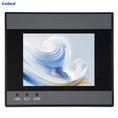
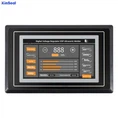


In today's era of rapid industrial automation, industrial PCs (IPCs) play a crucial role as the core devices of industrial control systems. This article provides an in-depth analysis and discussion of industrial PCs, covering their definition, hardware architecture, operating principles, main categories, application areas, and future development trends.
I. Definition of Industrial PCs
An Industrial Personal Computer (IPC) is a computer technology specifically designed for industrial environments. Unlike traditional office computers, IPCs not only possess strong data processing capabilities but also operate efficiently in extreme industrial conditions. Industrial environments are often characterized by high temperatures, low temperatures, dust, vibration, and electromagnetic interference, which necessitates that IPCs have high resistance to interference and exceptional durability. Simply put, an IPC serves as the "brain" of industrial automation control and is the key equipment driving various production process controls.
II. Hardware Structure of Industrial PCs
The hardware system of an industrial PC consists of a motherboard, CPU, memory, hard drive, monitor, I/O interface cards, industrial power supply, and chassis. Unlike ordinary computers, industrial PCs typically use industrial-grade components that can operate stably in high-temperature and high-humidity environments.
Motherboard: The motherboard is the core component of an industrial PC, integrating various interfaces and slots for connecting other hardware devices. The design of an industrial PC's motherboard is generally very straightforward, featuring a variety of expansion slots and sockets to accommodate different types of I/O modules and communication modules.
CPU: The CPU is the processor of the industrial PC, responsible for executing instructions and controlling the system's operation. A high-performance processor ensures rapid response and efficient operation when processing large amounts of data and complex control instructions.
Memory: Memory is used to store data and programs required during system operation; its capacity directly affects the industrial PC's speed and performance.
Hard Drive: The hard drive stores the industrial PC's operating system and applications, as well as production data, logs, and other information.
Graphics Card: The graphics card controls the display, rendering the images and text processed by the computer.
I/O Interface Card: Industrial PCs are typically equipped with various communication interfaces, including serial ports (RS232/RS485), Ethernet ports, and USB ports, to facilitate communication with on-site equipment and data transmission.
Industrial Power Supply: The power supply design of industrial PCs usually includes redundancy and backup features to prevent system crashes caused by power interruptions.
Chassis: The chassis design of industrial PCs takes into account factors such as fall protection and vibration resistance, enabling efficient operation in high-load and high-pressure environments, which significantly extends the equipment's service life.
III. Working Principle of Industrial PCs
The working principle of industrial PCs can be simply understood as three processes: data collection, processing, and output.
Data Collection: The industrial PC uses sensors and devices to convert external parameters (such as temperature, humidity, and pressure) into digital signals for real-time acquisition.
Data Processing: The industrial PC processes the collected information using its embedded control system to generate control codes.
Operation Execution: The control codes are transmitted via output interfaces to actuators-such as motors, valves, and pumps-to enable automatic control of industrial processes.
IV. Main Categories of Industrial PCs
Depending on application requirements and installation environments, industrial PCs can be classified into the following main categories:
Embedded Industrial PCs: Embedded industrial PCs typically integrate computer hardware, software, operating systems, and application software into a compact, dedicated computer system. They are generally characterized by small size, low power consumption, and high reliability, making them suitable for applications with strict space constraints and high real-time performance requirements.
Industrial Desktop Computers: Industrial desktop computers resemble standard commercial desktop computers but utilize higher-quality industrial-grade hardware and components, offering superior resistance to interference and enhanced durability. They typically feature higher performance and expandability, making them suitable for complex industrial automation control systems.
Rack-Mount Industrial PCs: Rack-mount industrial PCs are typically installed in standard 19-inch racks and offer a high degree of integration and scalability. They are commonly used in large-scale industrial automation systems, such as data centers and traffic control systems.
DIN-Rail Industrial PCs: DIN-rail industrial PCs are typically mounted on DIN rails and are characterized by their compact size and ease of installation. They are commonly used for monitoring and control tasks in industrial environments.
Embedded Boards: Embedded boards are specially designed computer motherboards typically used in embedded systems. They offer high levels of integration and flexibility and can be customized to meet specific application requirements.
Industrial Tablet PCs: Industrial tablet PCs combine the features of both tablet computers and industrial PCs, featuring touchscreens, high-performance processors, and large storage capacities. They are typically used in applications requiring human-machine interaction and complex control.
Special-Purpose Industrial PCs: Special-purpose industrial PCs are customized to meet the specific requirements of particular application scenarios. They typically possess unique functions and features to address the demands of specific industrial environments.
V. Application Areas of Industrial PCs
Industrial PCs are widely used across multiple industries, including industrial automation, smart manufacturing, and the Internet of Things (IoT), serving as a key driver of industrial development.
Manufacturing: In the manufacturing sector, industrial PCs are used to control production lines and monitor equipment status, as well as for data acquisition and guidance, ensuring the efficient and smooth operation of production processes. By actively collaborating with PLCs and coordinating with equipment such as robots, industrial PCs can perform tasks including precise production management, material handling, and equipment failure early warning.
Road Transportation: In the transportation sector, industrial PCs are widely used in traffic signal control, monitoring systems, road condition analysis, and intelligent traffic management. Leveraging rapid data processing and real-time control, industrial PCs enable traffic flow management, reduce accident rates, and enhance the efficiency and safety of urban transportation.
Energy Management: In the energy sector-including electricity, oil, and natural gas-industrial PCs facilitate real-time monitoring of data related to energy production, transmission, and storage, as well as remote control and fault prediction. Through industrial PC-based control systems, the energy industry can achieve automated equipment management, improve energy utilization, and prevent waste.
Automated Warehousing: In automated storage systems, industrial PCs are commonly used to manage inventory storage, warehouse entry and exit operations, and robotic processing tasks. By closely integrating with barcode scanners, RFID systems, and integrated robots, industrial PCs enable automated management, reducing labor costs and improving operational efficiency.
VI. Future Development Trends of Industrial PCs
With the rapid advancement of science and technology, industrial PCs are also continuously evolving, gradually moving toward greater efficiency, intelligence, and flexibility.
Integration with the Internet of Things (IoT): As IoT technology becomes more widespread, industrial PCs will place greater emphasis on integration with the IoT. Leveraging technologies such as sensor networks, cloud platforms, and data analytics, industrial PCs can collect and analyze vast amounts of industrial data in real time, thereby elevating the level of smart manufacturing.
Application of Artificial Intelligence: The application of Artificial Intelligence (AI) in industrial PCs will play a significant role, particularly in areas such as data mining and predictive maintenance. The introduction of AI algorithms enables industrial PCs not only to process real-time dynamics but also to make intelligent decisions, further optimizing production processes and reducing costs.
The Adoption of Edge Computing: Edge computing is a distributed computing architecture that shifts computational capabilities to the network edge. Industrial PCs play a vital role in this trend by processing and analyzing data on-site, thereby reducing data transmission latency and improving response times. Edge computing also enhances data processing efficiency, alleviates network bandwidth pressure, and enables industrial PCs to adapt more quickly to rapidly changing operational environments.
Integration and Modular Design: As industrial requirements diversify, future industrial PCs will place greater emphasis on integration and modularity. This design not only reduces costs but also enables flexible configuration to meet varying customer needs.
Improved Performance Efficiency: As industrial automation continues to demand higher computational performance and efficiency, future industrial PCs will strike a better balance between these factors. By adopting more advanced processors and power management technologies, industrial PCs will not only handle larger volumes of data but also conserve resources, reduce energy consumption, and minimize environmental impact.
Application of High-Speed Network Technologies: With the development of high-speed network technologies such as 5G and Wi-Fi 6, the networking capabilities and data transmission rates of industrial PCs will be significantly enhanced.
Eco-Friendly Design: As global environmental awareness grows, industrial PCs will evolve toward eco-friendly designs. In the future, they will adopt more energy-efficient and environmentally friendly designs to reduce pollution and energy consumption.
VII. Conclusion
As a key hardware component in industrial automation control, the importance of industrial PCs is self-evident. With continuous technological advancements, their applications across various industries will become more widespread, and their performance and architecture will continue to improve. For enterprises, selecting high-performance, stable industrial PCs will be a crucial step toward improving productivity, reducing costs, and advancing smart manufacturing. In future development, industrial PCs will not only continue to serve as the "nervous system" of industrial control but will also integrate closely with technologies such as the Internet of Things (IoT), artificial intelligence (AI), and 5G, propelling industrial automation to new heights.
Through the comprehensive analysis of industrial PCs presented above, we can see that they are not only the core equipment of industrial automation control systems but also a vital driving force behind industrial development. In the future, industrial PCs will continue to leverage their strengths, deeply integrate with emerging technologies, and inject new vitality into the development of industrial automation.