

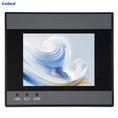
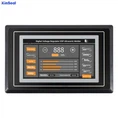


With the continuous development of industrial automation technology, human-machine interface (HMI) systems have become an important bridge between operators and machines.HMI systems not only improve productivity, but also enhance the safety and flexibility of operations.
Definition of Human Machine Interface (HMI) System
A human-machine interface (HMI) system is an interface used to control and monitor an industrial process, which allows the operator to interact with the machine.An HMI system typically consists of one or more display screens, input devices (e.g., touch screens, keyboards, and mice), and software for displaying and controlling the status and parameters of the machine.
Functions of an HMI system
- Data monitoring: HMI systems can display the machine's operating status in real time, including temperature, pressure, speed and other key parameters.
- Control operation :Operators can input commands through the HMI system to control the start, stop, speed adjustment, etc. of the machine.
- Alarm and notification: When the machine is abnormal, the HMI system can issue an alarm to remind the operator to take appropriate measures.
- Data recording and analysis: HMI system can record the machine's operating data, providing a basis for subsequent data analysis and optimization.
- User interface customization: According to different operational requirements, the HMI system can be customized with different user interfaces to improve the convenience of operation.
Advantages of HMI systems in industrial automation
- Increase productivity : HMI systems reduce operator's operating time and increase productivity through intuitive interfaces and fast response.
- Enhance safety : HMI system can monitor the machine status in real time, detect and deal with potential safety problems in time, and reduce the risk of accidents.
- Reduce Maintenance Costs: The data logging and analyzing capabilities of the HMI system allow for more accurate prediction of machine maintenance needs, reducing unnecessary maintenance costs.
- Improve operational flexibility: HMI systems allow remote operation and monitoring, enabling operators to control machines from different locations, improving operational flexibility.
- Facilitate technological upgrades : With the development of HMI technology, industrial automation systems can more easily integrate new technologies and functions, keeping them technologically advanced.
Application of HMI system in different industrial fields
- Manufacturing industry: In the manufacturing industry, HMI systems are used to monitor the operation status of production lines, adjust production parameters, and improve product quality and production efficiency.
- Energy industry: In the energy industry, HMI systems are used to monitor and control power stations, transmission networks and other key facilities to ensure the stability and safety of energy supply.
- Food and Beverage: In the food and beverage industry, HMI systems are used to monitor production processes to ensure food safety and quality control.
- Chemical industry: In the chemical industry, HMI systems are used to monitor chemical reactions to ensure the safety and efficiency of production processes.
Challenges faced by HMI system
- Network Security Issues : With the networking of industrial automation systems, HMI systems are facing more and more network security threats, such as hacker attacks, data leakage and so on.
- Technology upgrading: With the rapid development of technology, HMI systems need to be constantly upgraded to meet new industrial needs and technical standards.
- User training: With the increase of HMI system functions, operators need to receive more training to fully utilize the system functions.
- System Integration Issues : In a multi-device, multi-system industrial environment, HMI systems need to be integrated with different devices and systems, which may bring technical compatibility and integration costs.
Conclusion
HMI systems are more and more widely used in industrial automation, which not only improves productivity and safety, but also brings more flexibility and scalability to industrial automation. However, with the development of technology and the depth of application, HMI systems are also facing challenges such as cybersecurity and technological upgrading. In the future, with the integration of artificial intelligence, Internet of Things and other new technologies, HMI systems are expected to realize more intelligent and automated operations, bringing new changes to industrial automation.