


In modern industrial automation control systems, data exchange between variable frequency drives (VFDs) is a critical component for achieving coordinated equipment operation and intelligent control. This paper will delve into various technical solutions for direct data exchange between two VFDs, analyzing their working principles, implementation key points, and application scenarios to provide practical reference guidance for engineering technicians.
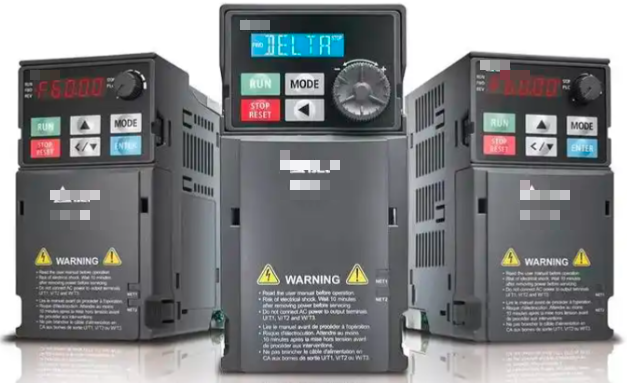
I. Direct Data Exchange Solution Based on Communication Protocols
1. Application of Mainstream Industrial Communication Protocols
(1) MODBUS Protocol Implementation
As the most widely used serial communication protocol, MODBUS RTU enables data exchange between two inverters via an RS485 interface. During implementation, one inverter is designated as the master and the other as the slave. Function codes 03/06 are used to read and write registers. Typical wiring employs twisted-pair cables with 120Ω termination resistors. Recommended baud rates are 9600bps or 19200bps. This approach offers high protocol standardization and strong compatibility, though data refresh cycles must align with real-time requirements.
(2) PROFIBUS-DP Networking Solution
For demanding applications, PROFIBUS-DP fieldbus can be deployed. By adding a DP communication module (e.g., Siemens CBP2), a master-slave network structure is established. This solution supports high-speed 12Mbps communication, enabling simultaneous transmission of multiple parameters. Typical applications include master-slave rolling mill control and multi-pump parallel systems. Key implementation points include: setting identical baud rates, configuring correct GSD files, and assigning unique station addresses.
2. Real-Time Ethernet Technology Applications
(1) EtherCAT Synchronous Control Solution
EtherCAT, with its outstanding real-time performance (≤100μs cycle time), is the preferred choice for precision coordinated control. By configuring ESC slave controllers, a daisy-chain topology is established. Typical applications include: color registration control in printing machinery and electronic gear synchronization in textile equipment. Critical parameters such as torque commands and speed feedback can achieve nanosecond-level synchronization via PDOs (Process Data Objects).
(2) PROFINET IRT Implementation Solution
For applications requiring isochronous synchronization, PROFINET IRT delivers precise clock synchronization (±1μs accuracy). By configuring IRT switches, a deterministic communication channel is established. This solution is particularly suited for multi-motor systems demanding strict phase relationships, such as servo positioning control in packaging production lines.
II. Hardware Direct Connection Solutions and Implementation Details
1. Analog Signal Interconnection
(1) 4-20mA Current Loop Implementation
Configure the inverter's AO (Analog Output) and AI (Analog Input) terminals to establish unidirectional/bidirectional signal channels. Typical applications include master-slave inverter speed tracking control. Key implementation points: signal isolation (recommend using magnetic isolation modules), grounding (single-point grounding), and anti-interference measures (shielded twisted-pair cables).
(2) ±10V Voltage Signal Interconnection
Suitable for high-precision applications such as tension control systems. Impedance matching requires attention; a 250Ω terminating resistor is recommended in parallel at the receiving end. Signal amplifiers should be added for long-distance transmission (>15m).
2. Digital Signal Direct Connection
(1) Multifunction Terminal Interlocking Solution
Enables status interaction by configuring DO (digital output) and DI (digital input). Typical applications include: start-stop interlocking, fault interlocking, etc. Opt for optically isolated terminals to enhance interference resistance.
(2) High-Speed Pulse Signal Exchange
For applications requiring synchronized pulses (e.g., electronic cam control), encoder signal sharing can be achieved via PG cards. Key technologies include: differential signal transmission (RS422 standard), divider configuration, and phase compensation.
III. Hybrid Communication Solution Design
1. Communication Protocol + Hardwired Backup Solution
Dual-channel designs are recommended for critical applications, such as MODBUS communication paired with hardwired emergency stop. Hardwired signals ensure safe system shutdown during communication failure. Redundancy designs must incorporate fault detection mechanisms (e.g., heartbeat packet monitoring) and failover logic.
2. Distributed Clock Synchronization Technology
Precision time protocol based on IEEE 1588 (PTP) enables microsecond-level synchronization among multiple inverters. When paired with real-time Ethernet like EtherCAT, it supports multi-axis coordinated motion control. Key parameters include: clock servo algorithms, boundary clock configuration, and synchronization cycle settings.
IV. Analysis of Typical Application Cases
1. Central Air Conditioning Pump Group Control System
MODBUS-TCP enables data exchange among six VFDs. The master controller continuously collects operational parameters (current, frequency, temperature) from each pump and dynamically adjusts the operating combination via fuzzy PID algorithms. Implementation data shows energy savings of 18%-22% compared to independent control.
2. Multi-Section Drive System for Paper Machines
PROFIBUS-DP was applied to implement speed chain control for 8 VFDs, transmitting 32 parameters including speed setpoints and torque limits between master and slave stations. Key technologies include: ramp control, load distribution algorithms, and paper break detection interlocks.
V. Implementation Considerations
1. Electromagnetic Compatibility Design
(1) Communication Cable Selection: Use double-shielded twisted pair cables (e.g., Belden 9842).
(2) Grounding Specifications: Single-ended grounding of communication shields with resistance <4Ω.
(3) Wiring Separation: Maintain ≥30cm distance from power lines; cross at 90° angles.
2. Parameter Configuration Essentials
(1) Communication Timeout Setting: Typically 3-5 times the normal cycle duration.
(2) Data Mapping: Maintain consistent transmit/receive register addresses.
(3) Fault Handling Strategy: Predefine degraded operation modes for communication interruptions.
3. Debugging and Diagnostic Methods
(1) Protocol Analyzer Packet Capture: Identify data frame errors.
(2) Signal Quality Testing: Analyze RS485 signal integrity via eye diagram analysis.
(3) Network load assessment: Ensure utilization ≤70%.
VI. Future Technology Trends
1. Application of TSN (Time-Sensitive Networking) Technology
Standards like IEEE 802.1Qbv will enable deterministic transmission over standard Ethernet, potentially improving multi-inverter synchronization accuracy to the 100ns level.
2. Integration of 5G Industrial Modules
Embedding 5G URLLC modules enables low-latency (<10ms) data exchange between remote inverters, offering new solutions for distributed drive systems.
3. Edge Computing Empowerment
Deploying lightweight AI algorithms locally on inverters enables autonomous decision-making and collaborative optimization among devices, reducing communication load on host computers.
Conclusion:
The selection of data exchange technologies between inverters should comprehensively consider control requirements, cost budgets, and system scalability. With the advancement of industrial internet technologies, more innovative interconnection solutions will emerge in the future. In engineering practice, rigorous EMC testing and communication stress testing are recommended to ensure long-term stable system operation. For critical applications, redundancy design and fail-safe mechanisms should be considered to guarantee the reliability of production systems.