


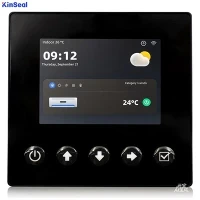


There are many languages and technologies used for HMI programming, some of the more common ones include the following:
C++: C++ is a high-level programming language that can be used to develop a variety of applications and operating systems, as well as to develop human-machine interfaces.
Java: Java is a cross-platform programming language that can be used to develop a variety of applications and web applications, as well as human-machine interfaces.
Python: Python is a scripting language that can be used to develop various applications and web applications, as well as human-machine interfaces, such as using frameworks like Tkinter, PyQt, and so on.
C#: C# is an object-oriented programming language, mainly used to develop Windows applications and Web applications, can also be used to develop human-machine interface.
j a v a s c r i p t : JavaScript is a scripting language, mainly used for Web development, but also can be used for the development of human-machine interface, such as the use of Electron and other frameworks.
HTML/CSS: HTML and CSS are markup languages used to develop web interfaces and can also be used to develop interfaces for desktop applications.
In general, the languages and technologies used for HMI programming vary depending on the application scenarios, and you need to choose the appropriate language and technology according to the specific needs. At the same time, some open source GUI frameworks, such as Qt, wxWidgets, GTK, etc., can also be used to simplify the development of HMI.
HMI Design Methods
HMI design methods include the following aspects:
User research: Through questionnaires, interviews, observations, etc., to understand the user's needs, usage scenarios, behaviors, and feedbacks, etc., to provide basic data for HMI design.
Design thinking: Adopt user-centered design thinking, focus on user experience and user participation, and pay attention to user needs, behaviors and feedbacks, etc., so as to create a better HMI design.
Information architecture design: design the information structure, organization and content layout of the HMI according to user needs and usage scenarios.
Visual design: Design the colors, fonts, icons, images and other visual elements of the HMI to improve user experience and aesthetics.
Interaction design: Design the interaction mode of the human-computer interface, including how to let the user interact with the system and how to feedback the user input and operation results.
User experience design: When designing the human-computer interface, it is necessary to consider the user's feelings and feedback in order to improve user satisfaction and loyalty.
Responsive design: Design the responsive layout of the HMI for different devices, screen sizes and resolutions to adapt to different user devices.
Testing and Evaluation: After the design is completed, testing and evaluation are required to check the performance, usability and reliability of the HMI to ensure that it meets user needs and usage scenarios.
The above are some common HMI design methods, designers can choose the appropriate design method for HMI design according to specific needs and situations.
Principles of HMI design
The principles of HMI design mainly include the following aspects:
Ease of use principle: the design of human-machine interface needs to take into account the user's habits and psychological needs, minimize the learning cost, make the interface easy to understand, easy to operate, so that users can quickly complete the task.
Consistency principle: Consistency should be maintained between different elements of the human-machine interface, such as colors, fonts, typography, icons, etc., so that users can quickly identify and understand.
Visibility principle: Important information and functions should be fully displayed and reflected in the HMI, so that users can directly see the required information and operational elements without excessive rummaging and searching.
Feedback principle: The HMI should give users timely and accurate feedback, informing them of the results and status of operations, so that they can clearly know whether their behavior and operations are correct and successful.
Flexibility: When designing the HMI, the user should be provided with a variety of operating methods and options to meet the needs and habits of different users.
Simplicity: The HMI should be designed to be as simple and clear as possible, removing unnecessary complexity and cumbersome operations, so that the user can focus on completing the task.
Aesthetics principle: the degree of aesthetics of the HMI is also very important, a beautiful, comfortable, in line with the user's aesthetics of the HMI will give the user a better experience.
The above are some common HMI design principles, designers can choose the right design principles according to different needs and situations to improve user satisfaction and experience.