




As the level of industrial automation continues to rise, the importance of industrial bus technology has become increasingly evident. As one of the core technologies in the industrial sector, industrial buses play a vital role in enabling efficient communication and data exchange between devices. An industrial bus refers to a set of shared signal lines used to transmit information and facilitate communication between modules; under the control of a master device, it serves as a pathway for transmitting information to a specific receiving device.
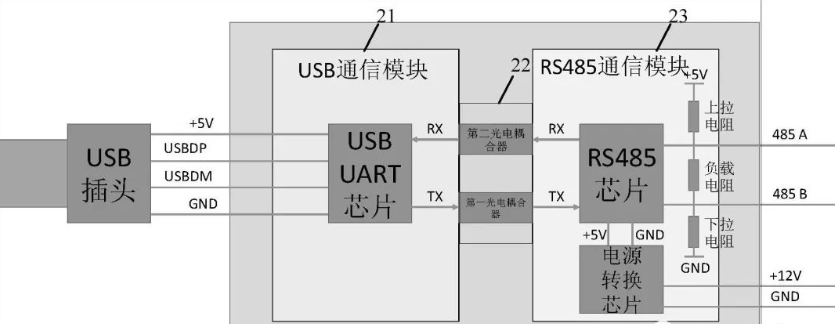
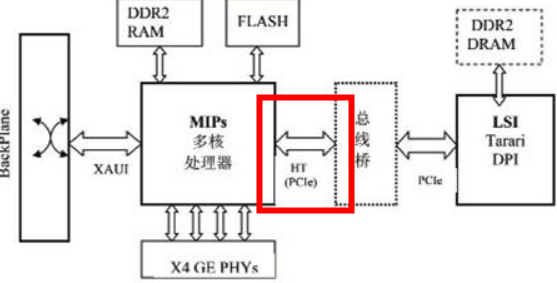
Based on their location, buses can be classified into external buses, internal buses, and on-chip buses. Common external buses include RS-232, RS-485, USB, and CAN (Figure 1); common internal buses include HT, I²C, and SPI (Figure 2); and common system buses include data buses, control buses, and address buses.
 External Bus
Internal Bus
Common Industrial Buses
CAN Bus
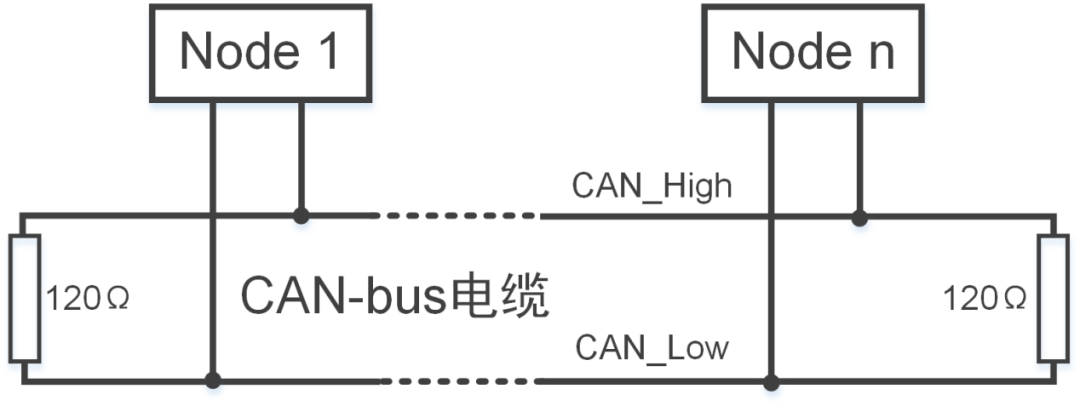
CAN (Controller Area Network) is a serial communication protocol standardized by ISO. The CAN bus is a serial data communication protocol developed by Bosch of Germany in the early 1980s to facilitate data exchange among the numerous control and testing systems in modern automobiles. It is a multi-master bus that can use twisted-pair cable, coaxial cable, or optical fiber as communication media. The maximum communication rate can reach 1 Mbps.
EtherCAT Bus
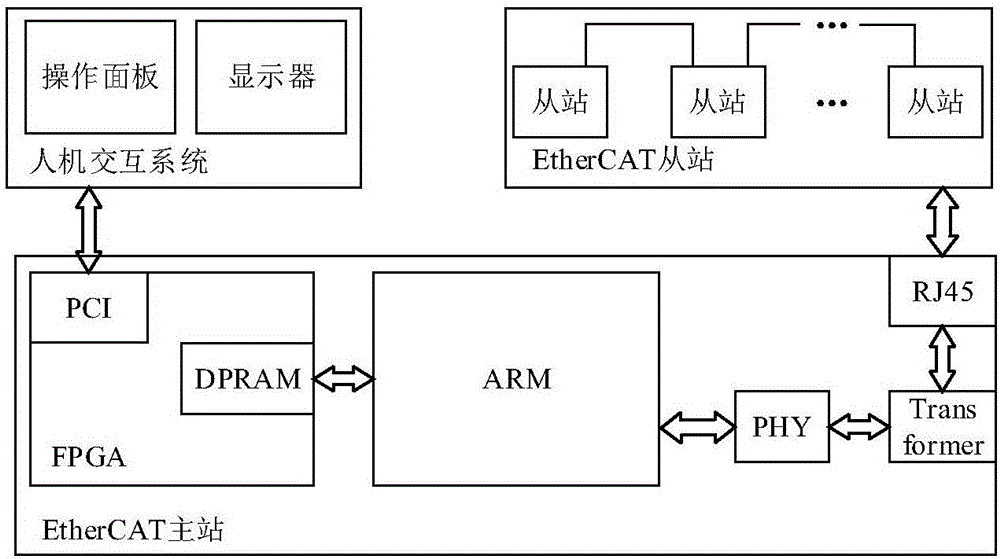
EtherCAT (Ethernet for Control Automation Technology) is a high-performance industrial Ethernet communication protocol designed specifically for real-time industrial control systems. Introduced in 2003 by Beckhoff Automation of Germany, it is an open international standard.
In an EtherCAT network, data is transmitted through a ring or linear network topology. Each slave device reads the data it needs and then immediately passes the data packet on to the next slave; this process is called "processing on the fly."
ProfiNet Bus
ProfiNet is an advanced communication system that supports distributed automation, developed by Siemens and the ProfiBus User Association. ProfiNet = ProfiBus + Ethernet; it adapts the ProfiBus master-slave architecture to Ethernet and is an automation bus standard based on Industrial Ethernet technology. It not only supports various topologies, facilitating system integration and expansion, but is also compatible with existing Ethernet interfaces and protocols; It not only enables real-time control of production lines but also provides data services to the web and the cloud via TCP.
Modbus Bus
The Modbus communication protocol was invented by Modicon in 1979 and was one of the earliest bus protocols used in industrial settings. There are multiple versions of the Modbus communication protocol, with Modbus RTU, Modbus ASCII, and Modbus TCP being the most commonly used.
Considerations
To meet the varying requirements of different application scenarios, the following factors must be clarified:
① Timeliness Requirements: Select an industrial bus with high-speed transmission capabilities based on the timeliness requirements for information transmission during the production process. Some common high-speed industrial buses include EtherCAT, Profinet, and EtherNet/IP. These buses feature low latency and high bandwidth, making them suitable for scenarios with high communication speed requirements.
② Data Volume and Real-Time Requirements: Selecting an appropriate industrial bus requires consideration of data volume and real-time requirements. Some buses, such as CAN and DeviceNet, are suitable for scenarios with small data volumes and low real-time requirements, while Modbus and ProfiBus are suitable for scenarios with moderate data volumes and higher real-time requirements.
③ Reliability and Fault Tolerance: Consider potential risks in industrial environments, such as interference and equipment failures. For example, the ControlNet bus offers robust fault-tolerance capabilities, making it suitable for scenarios requiring high reliability. Furthermore, certain buses, such as EtherCAT and ProfiNet, feature automatic detection and self-healing capabilities, ensuring reliable communication.
④ Flexibility and Interoperability: Whether the system needs to communicate with multiple devices and equipment from different manufacturers is another factor to consider. Some industrial buses, such as Modbus and OPC UA, offer excellent interoperability and device compatibility, making them well-suited for scenarios requiring communication with multiple devices.
Process Steps
Before selecting an appropriate industrial bus, it is recommended to follow these steps:
① Requirements Analysis: Comprehensively consider the production process, equipment requirements, and other specific needs to clarify the specific characteristics required of the industrial bus.
② Market Research: Gain a detailed understanding of the features, application scenarios, market share, and costs of various industrial buses. Information can be obtained by reading relevant reports, attending industry trade shows, and consulting with professionals.
③ Vendor Evaluation: Contacting various industrial bus suppliers will help you better understand the performance, technical support, and other services offered by each.
④ Technical Validation: Through practical validation and testing, compare the performance and reliability of different industrial buses within the system (based on metrics such as bus transmission cycle, clock cycle, operating frequency, and bus bandwidth) to select the optimal solution.
Points to Note
After selecting a suitable industrial bus, pay attention to the following aspects:
① Device Compatibility: Ensure that devices are compatible with the selected industrial bus and support the corresponding communication protocols.
② Topology: Select an appropriate bus topology-such as bus, star, tree, or ring-based on system requirements.
③ Efficient Maintenance: Understand the maintenance and troubleshooting procedures for the industrial bus, and plan and manage the industrial bus network appropriately to ensure stable and reliable communication.
Finally, when selecting an industrial bus, consider long-term planning and scalability to avoid frequent replacements and upgrades.