


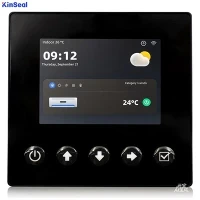


PLC control system can execute commands according to pre-set logic, and integrates modern technologies such as communication technology, computer technology and microelectronics technology. Commonly used in industrial control equipment. PLC control system of good versatility, good reliability, good anti-interference ability and other characteristics of the intelligent control of industrial equipment has good significance.
PLC control system 3 major components:
1. data collector. The data collector collects various information about the operation of the equipment and then feeds the data back to the processor. There are various types of data loggers available, which can be customized according to the requirements. This is the beginning of the whole PLC control system.
2. Core Processor. The core processing unit mainly receives feedback data from the data collector, sorts the data, and outputs signals to control the actuator according to the preset logic. The core processor has a data storage function and is also used to store the edited program. It is the core part of the whole PLC control system.
3.Actuator. In the PLC control system, the actuator belongs to the end. The actuator receives signals from the core processor and performs corresponding actions according to the signals, thus realizing the control of various devices.
PLC (Programmable Logic Controller) controller is an industrial control device based on digital computer technology, which is mainly composed of the following parts:
Central Processing Unit (CPU): It is the core component of PLC controller, which is responsible for interpreting input signals, executing program logic, and controlling output signals. According to different application scenarios, CPU can be categorized into different types such as low-end, mid-end and high-end.
Input Module: Used to monitor external input signals, such as sensors, buttons, switches, etc., and convert them into digital signals to be sent to the CPU.
Output Module: Produces corresponding output signals according to the instructions of CPU to control the operation of external devices, such as motors, valves, lights, etc.
Power module: Provides power for the whole PLC controller.
Communication module: used for communication between PLCs or between PLCs and the upper computer.
Programming Software: Used to write program logic and download the program into the PLC controller. Common PLC programming languages include Ladder (Ladder Diagram), SFC (Sequential Function Chart), ST (Structured Text), FBD (Function Block Diagram) and so on.
Memory: Stores programs and data. According to the different storage media, it can be divided into EPROM, EEPROM, SRAM, SD card, etc.
Analog input and output module: used to receive and output analog signals, such as temperature, pressure, flow, etc.
In addition to the above components, PLC controllers may also include specialized modules such as counting modules, PWM modules, position modules, etc. to meet specific application requirements.