




I. Introduction
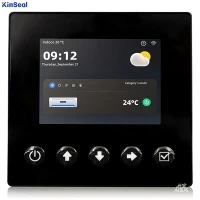
In the field of information technology and automation control, Human-Machine Interface (HMI) is a crucial concept. It is not only a bridge for information exchange between people and machines, but also an indispensable part of modern industrial production, scientific research and daily life. At the same time, touch screen, as a common input device, has a close relationship with HMI. In this paper, we will delve into the definition and function of human-machine interface as well as the difference between it and touch screen, and provide readers with a clear and comprehensive understanding through detailed analysis and explanation.
II. the definition and function of the human-machine interface
Definition
Human-computer interface, is the interface for interaction and information exchange between human and machine. It is a kind of technology that enables the human operator to establish contact and information interaction with the machine through visualization means. The human-machine interface can display the control system status, parameters and other information intuitively and amicably in front of the operator, and at the same time, it can also transmit the operator's instructions to the control system, so as to realize the control and regulation of the control system.
Functions
The main functions of HMI include the following aspects:
(1) Information display: the machine's status, parameters, data and other information are visualized to the operator in the form of graphics, text, sound and so on.
(2) Operation control: through the keyboard, mouse, touch screen and other input devices, receive the operator's instructions, and transfer them to the control system to realize the control and adjustment of the machine.
(3) Interactive feedback: Provide real-time interactive feedback, such as operation prompts, error alarms, etc., according to the operator's commands and the state of the machine.
(4) Data management: collect, store, process and analyze the data generated by the machine to provide decision support for the operator.
III. the definition and function of the touch screen
Definition
A touch screen is an electronic display that can be operated by touch with a finger or a specific tool (such as a capacitive pen). It is an input device that can receive the operator's touch commands and convert them into machine-recognizable signals.
Functions
The main functions of a touch screen include the following:
(1) Input instructions: Through touch operation, various instructions and commands are input to the machine to realize the control and operation of the machine.
(2) Selection function: Select the corresponding function or parameter by touching the menu, button or icon and other options on the screen.
(3) Handwriting Recognition: Support handwriting input, convert it to text or graphics by recognizing handwriting.
(4) Multi-touch: support for simultaneous touch multiple points to achieve more complex gesture recognition and operation.
IV. the difference between human-machine interface and touch screen
Although the human-computer interface and touch screen are important means of interaction between people and machines, there are still some essential differences between them:
Definition and Scope
Human-machine interface is a broader concept, which includes all the equipment and technology used for interaction between humans and machines, such as the computer's software interface, touch screen, buttons, indicators, voice recognition and so on. And touch screen is just an input device in HMI, which is an input device installed in front of the display to receive touch commands from the operator.
Functions and Uses
The main function of human-machine interface is to realize the information interaction and control regulation between human and machine, which can be realized through a variety of ways and means to achieve this purpose. The touch screen is mainly used to receive the operator's touch commands and convert them into machine-recognizable signals, which is a more intuitive and simple way of human-computer interaction.
Technical Characteristics
The technical characteristics of human-computer interface mainly include intuition, friendliness, ease of use and so on. It can display information and receive instructions through graphics, text, sound and other means, enabling the operator to interact with the machine more conveniently and quickly. Touch screen, on the other hand, is characterized by intuition, simplicity, ease of operation, etc. It can be operated by touch through fingers or specific tools, and human-computer interaction can be realized without additional input devices.
Stability and Reliability
Since the human-machine interface contains a variety of interaction methods and technologies, its stability and reliability will be affected by a variety of factors. As an input device, the stability and reliability of a touch screen is relatively high, but problems such as malfunction or misoperation may occur in the course of use.
V. Conclusion
To summarize, although human-machine interface and touch screen are both important means of interaction between humans and machines, there are some essential differences between them. Human-machine interface is a broader concept, including a variety of interaction methods and technologies; while the touch screen is a specific input device for receiving the operator's touch instructions. In practical applications, we can choose the right HMI and touch screen devices according to specific needs and scenarios to achieve more efficient and convenient human-computer interaction.