


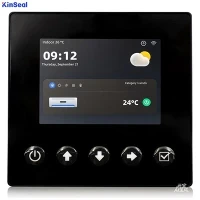


The overall embedded systems market has grown considerably over the past few years. With the emergence of the Internet of Things (IoT) and Industrial Internet of Things (IIoT), embedded systems technology has become an enabler for the rapid growth of smart and connected IoT ecosystems. The broad, diverse and highly fragmented embedded systems market includes software, development platforms and hardware. More and more industries, products and services now rely on embedded systems. Industrial markets for embedded systems include communications, automotive, aerospace, consumer electronics, military systems, as well as industrial control and others including smart cities.
Embedded systems are usually some combination of hardware and software with fixed or programmable functions. Embedded systems can be designed to support one or more specific functions in a larger system. Examples include industrial control systems and machines, automobiles, military systems such as avionics and weapons systems, medical devices, consumer products, smartphones and building automation.
For simple, high-volume embedded devices for the consumer market, the embedded system cost may be 99% hardware and 1% software. However, for highly specialized, low-volume embedded systems used in aircraft, automobiles or highly reliable industrial controls, the software can be 95% of the embedded system cost if it includes testing and meets the standards of complex applications. To further complicate matters, there is no clear line between embedded systems and computers. Even today, there is some debate about whether a smartphone or smart IoT gateway is an embedded system or a standalone computer. Where traditional IoT gateways collect wireless sensor data and push it to the cloud, new smart IoT gateways and edge devices can support LAN, WAN, Hardware components for the embedded systems market include chips, printed circuit boards, firmware, target devices and more. Software elements include development platforms, real-time operating systems (RTOS), testing, and more. Of course, the overall market for these embedded systems supports much larger devices and machines.
Embedded devices are often powered by software that is integrated with the hardware, including systems-on-chip (SoCs), field-programmable gate arrays (FPGAs), integrated circuits (ICs) designed to be programmed by embedded developers for specific functions, and other firmware versions. This makes it difficult to completely separate software from hardware. Embedded systems vendors in this market may include those that offer only software, such as development and test tools and real-time operating systems (RTOS). As well as those that also offer FPGAs, SoCs and other firmware products.
Overall, embedded systems are a very mature technology, and with the continued development of new, more powerful processors, the technology can now support the next generation of smart devices, machines, equipment and factories. Embedded systems represent a key enabling technology for smart, connected products, machines and systems that encompass the Industrial Internet of Things and support the digital transformation of entire industries.
One of the key trends in the embedded space is the emergence of smart edge devices, which will help make industrial production systems and process plants part of the digital enterprise. Embedded intelligence in sensors and other metering devices will allow access, aggregation, and analysis of data to support advanced analytics, making production systems and equipment part of the industrial IoT ecosystem and digital twins. These are becoming key enabling technologies to help optimize the asset lifecycle, especially the operations and maintenance phases.
To capitalize on the business opportunity, both cloud and edge infrastructure technology providers will need to continue to scale to support billions of sensors and tens of thousands of intelligent systems. Edge devices must be connected and intelligent. The overall embedded systems market is poised for significant growth due to the huge demand for intelligence at the edge. The growing IoT ecosystem and the steady progression of industrial automation to cyber-physical systems based on predictive and prescriptive analytics will eventually lead to autonomous and self-healing systems. This will be a major industry driver for the growth of embedded systems.
Embedded Systems in Industry
Embedded systems have been a major technology in industries such as aerospace and defense, automotive, medical devices, communications and industrial automation for decades. As processor architectures have evolved and more computing power can be embedded in systems and devices, the intelligence and functionality of these systems has increased exponentially. This has made products that have traditionally used embedded systems smarter and more powerful, and has made products in other industries (consumer goods, home appliances, sporting goods, etc.) smart and connected. Embedded systems are becoming an integral part of almost everything in our lives.
Automotive
Currently, automotive applications represent the largest use of embedded systems and will likely remain the largest segment for years to come. In automobiles, embedded systems are used for infotainment, safety, driver awareness, maintenance, and overall system control of the vehicle. The need for expansion of vehicles with advanced navigation, driver assistance, and vehicle-to-street communication capabilities will only increase the demand for embedded systems. In addition, intelligent system control is expanding with the emergence of hybrid electric vehicles and electric cars.
In addition, emerging fully autonomous vehicles will require highly intelligent systems. Far more complex than the embedded systems in today's vehicles. Computing systems in these vehicles will need to run multiple complex AI software and systems for navigation, road and vehicle sensing, traffic patterns, pedestrian sensing, risk perception and assessment, and more. A new generation of processors is being developed for embedded systems to meet these computing and intelligence requirements.
Automotive Intelligence Embedded Systems
When discussing the topic of AI in the automotive industry, the first thing that comes to most people's mind is self-driving cars. There is no doubt that developing driverless cars is a very active area of research and that the technology will be a viable part of transportation in the future, if not the near future. However, today's reality is that cognitive learning algorithms are primarily used to improve efficiency, safety and add value to processes around traditional manually driven vehicles.
Until the automotive industry is ready to put AI "behind the wheel," it will first want to apply it to current production vehicles with a wide range of driver-assistance technologies.AI is ideally suited to provide advanced safety features to connected vehicles. Driver assistance features embedded in vehicles coming off the production line today can help drivers feel comfortable with AI before the vehicle becomes fully autonomous.
By monitoring dozens of onboard sensors, AI can recognize dangerous situations, automatically brake and control the vehicle to avoid accidents, and detect and warn drivers of hazards in and around other vehicles.
One area where automotive customers are currently using AI is AI-based cloud services for predictive maintenance. Unlike conventional vehicles, connected vehicles can do more than warn drivers through check engine lights and low tire warnings. In many of the latest models, embedded AI algorithms monitor hundreds of sensors and can detect problems before they affect vehicle operation. By monitoring thousands of data points per second, AI can detect small changes that may indicate component failure or malfunction.
Healthcare
Healthcare is one of the fastest developing applications for embedded systems. For example, handheld and portable therapeutic devices, as well as devices and equipment used to monitor vital signs, make extensive use of embedded systems. With small embedded systems that monitor heart rate or identify blocked arteries, embedded technology has also made its way into complex surgical procedures.
While the physical size of semiconductors, processors and chips in embedded systems used in healthcare has decreased, we are also seeing an exponential increase in intelligence and functionality. This will enable a new generation of medical devices to act and intervene within the body and its organs in novel and innovative ways. Tiny but powerful devices will be able to remotely monitor and determine the status of multiple patients through mobile devices connected to web-based diagnostic centers.
Consumer Electronics
Consumer electronics has been a major market for embedded systems for decades, but with the advent of the Internet of Things (IoT), the market is taking on new significance. Smart connected products require new design standards, and embedded intelligence has become a major component. Entrepreneurial engineers may incorporate new types of sensors and software into the products they design.
The value of connecting machines and assets in factories and infrastructures is well established, especially as it relates to reducing unplanned downtime and optimizing operations. In turn, there will be tremendous value in connecting consumer products (smart phones, heart rate monitoring devices, smart appliances, lighting, security, etc.) for tracking, monitoring, control and tuning. This applies not only to the users of the products, but also to the longevity of the products, which will improve the design of the products in the future, as well as to the larger systems in which these products are contained.
Building Automation
Automation systems for smart buildings and HVAC utilize embedded software and hardware as well as the industry and will grow rapidly in the coming years. As we enter the era of smart buildings and smart cities, embedded intelligence will become an integral part of these intelligent systems. Building automation is primarily based on monitoring and maintaining environmental conditions, lighting and access control. As systems become smarter, smart building functionality may expand into predictive and prescriptive systems that determine optimal conditions. Eventually, the goal is to move to fully autonomous and self-healing systems. These systems will be based on artificial intelligence and machine learning, all based on embedded intelligence.