

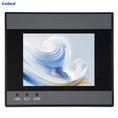
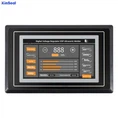


Industrial controllers, also known as industrial control computers, are computer systems specifically designed to monitor, control and manage a wide range of industrial processes and equipment. They are typically characterized by high performance, reliability and immunity to interference in order to cope with complex industrial environments. The main roles and functions of industrial controllers include the following:
Monitoring and collecting data: by connecting sensors and instruments, industrial controllers are able to monitor and collect a variety of industrial data in real time, such as temperature, pressure, flow rate and so on. These data are essential for the control and optimization of industrial processes.
Data processing and control algorithms: Industrial controllers are able to process large amounts of data and perform real-time data analysis and decision-making based on preset control algorithms. They are capable of calculating, comparing and logically judging the collected data to provide automated control of industrial systems.
Equipment control and scheduling: Industrial controllers can control and schedule various industrial equipment according to set logic rules and control algorithms. For example, regulating temperature controllers, switching power supplies, actuators, etc. to ensure stable operation of industrial processes.
Data storage and management: Industrial controllers usually have large-capacity storage devices that can store and manage the collected data. This data can be used for subsequent analysis, reporting and decision support.
Communication and Networking Functions: Industrial controllers can be networked with other devices and systems through various communication interfaces. This allows industrial controllers to exchange data and monitor remotely with host computers, monitoring systems, enterprise-level resource planning (ERP) systems, and more.
Application scenarios for industrial controllers include, but are not limited to, the following:
Industrial automation control: Industrial controllers can be used for automation control of industrial production lines, such as robot control, assembly line control, automated assembly, etc.
Data Acquisition and Processing: Industrial controllers can be used to collect data from a variety of sensors, instruments and other devices, and process and analyze them, such as temperature, humidity, pressure and other data collection and analysis.
Machine vision: ICPCs can be used for machine vision applications, such as image recognition, target tracking, and automatic detection.
Transportation: Industrial controllers can be used in transportation applications, such as intelligent traffic signal control, vehicle management, and rail transportation control.
Medical equipment: ICPCs can be used in medical equipment, such as medical image analysis, surgical robots, and medical equipment control.
Military: ICPCs can be used in the military field, such as military equipment control, drone control, military communications, etc.
Smart home: ICPC can be used in smart home field, such as smart home appliance control, security monitoring, smart home center control, etc.