





Serial communication is still a widely used technology in industrial automation, embedded systems and communication devices. However, RS232, RS422, and RS485 are three common options when picking a serial communication standard. They each have their own advantages and disadvantages and are suitable for different application scenarios. To make the right choice, it is important to have a thorough understanding of their working principles, features and application scenarios.
1.RS232
RS232 is one of the earliest serial communication standards developed and is widely used to connect PCs and various devices.RS232 uses single-ended signaling, usually using a transmitter line (TXD) and a receiver line (RXD), plus a ground line (GND) for communication.
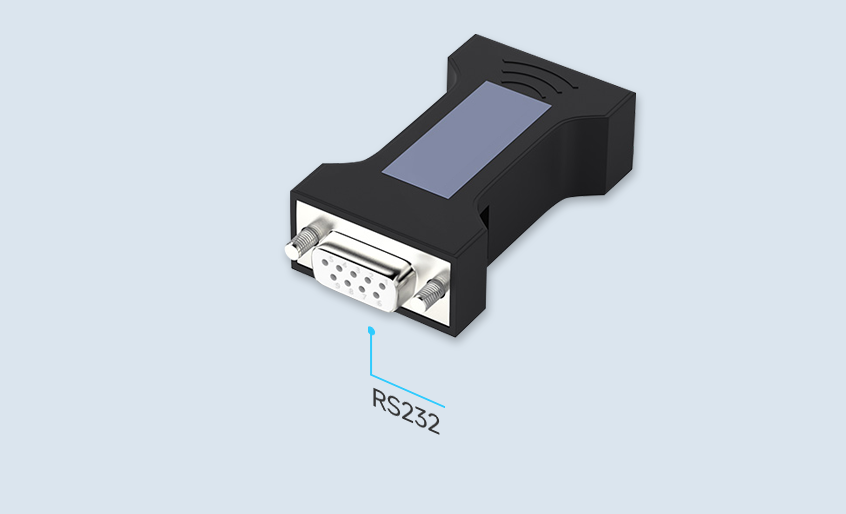
RS232 is one of the earliest serial communication standards developed and is widely used to connect PCs and various devices.
Characteristics:
Single-ended communication: RS232 selects single-ended communication mode, that is, data is transmitted through a power line, and another line is used as reference ground (GND).
Short-circuit transmission: Because the signal is transmitted to ground, RS232 is not strong noise immunity, the larger transmission distance is generally not more than 15 meters, the highest transmission speed of 115.2 kbps.
Low cost, simple and practical: RS232 interface is easy to design and widely used, especially in computer serial port, modem and other facilities occupy an important position.
Applicable Scenarios:
RS232 is mainly used for low-speed, short route, point-to-point communication scenarios, such as serial debugging, old-style peripheral linkage (such as copiers, mice), microcontroller serial communication.
2.RS422
RS422 is an enhanced serial communication specification designed to get rid of the position and speed limitations of RS232 to support longer distance high-speed communication.
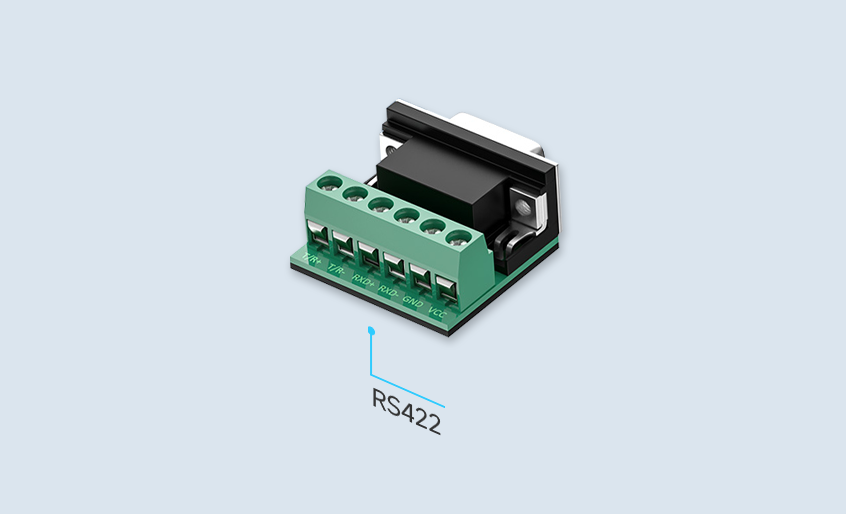
RS422 is an enhanced serial communication specification designed to move away from the position and speed limitations of RS232 to support high-speed communication over longer distances.
Features:
Differential signaling: RS422 uses differential signaling to transmit positive and negative signals according to each of the two power cables, thus improving interference immunity and signal integrity.
Long-distance, high-speed transmission: RS422 has a large transmission distance of up to 1200 meters and a transmission speed of up to 10 Mbps, making it suitable for long-distance, fast data transmission.
Multi-point communication: Although RS422 was originally designed for point-to-point communication, in practice, it can be used for a host connected to multiple slave scenarios, generally supporting 10 receivers.
Applicable Scenarios:
RS422 is widely used in images that must be transmitted over long distances and at high speeds, such as industrial automation technology, data management systems, and remote control systems.
3.RS485
RS485 is developed on the basis of RS422, which enhances the multi-point communication capability and is widely used in industrial automation and building control, etc. RS485 also adopts differential signal transmission, but allows multiple devices to communicate in both directions on the same bus.
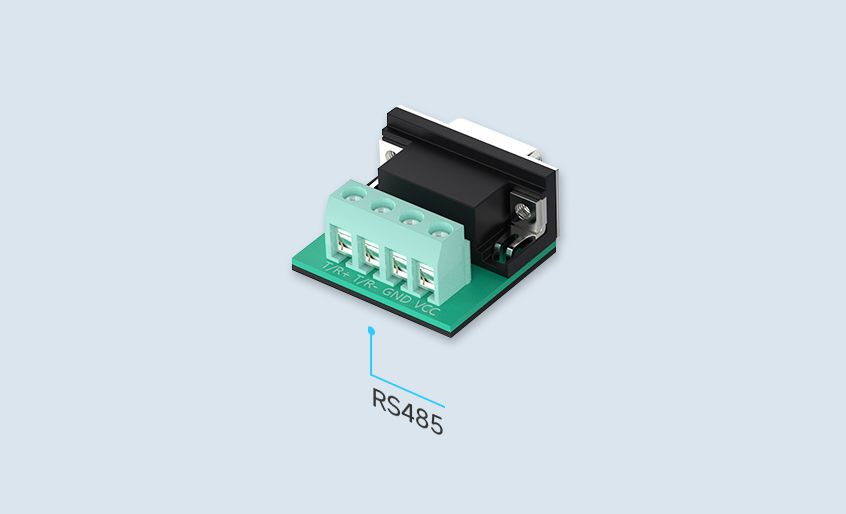
RS485 is developed on the basis of RS422, which enhances the multi-point communication capability and is widely used in industrial automation and building control.
Features:
Multi-point bi-directional communication: RS485 supports multi-point communication, allowing up to 32 devices to be connected to the same bus, accomplishing multi-master multi-slave communication.
Strong anti-interference: RS485 also adopts differential signaling, which has strong anti-interference and is suitable for harsh environments in industrial sites.
Long-distance transmission: The main transmission distance of RS485 is also 1200 meters, and the transmission speed can be adjusted according to the spacing, up to 100 kbps for long distance, and up to 10 Mbps for short route.
Applicable Scenarios:
RS485 is necessary for industrial control system, widely used in PLC, sensor network, building intelligence, instrumentation equipment and other multi-point, multi-device communication scenarios.
4. RS232 vs RS422 vs RS485: how to choose?
Choosing the right serial communication specification lies in the following main factors:
Transmission distance: For short line communication (a few meters to a dozen meters), RS232 is sufficient.
For scenarios that require long distance transmission, RS422 and RS485 are more appropriate, especially in scenarios that must exceed 100 meters, RS485 or RS422 is preferred.
Communication rate: RS232 is suitable for low speed communication.
RS422 and RS485 support higher transmission speeds, when the need for rapid data transfer should be prioritized.
Immunity: RS232 is not strong in immunity to interference and is only suitable for scenarios where the environmental interference is small.
RS422 and RS485 are both highly resistant to interference, especially in industrial environments where RS485 is more reliable.
Communication mode: If point-to-point communication is necessary, RS232 and RS422 can be competent, and RS232 is more simple and practical.
If you need multi-point communication, RS485 is the best choice.
Equipment cost and complexity: RS232 socket is simple, low equipment cost, applicable to the screen without complex functions.
RS422 and RS485 are more complex to complete, but more powerful, suitable for industrial grade applications.
5.Summary
RS232, RS422, RS485 three kinds of serial communication specifications have their own merits and are suitable for different application scenarios. RS232 is suitable for short routes, low-speed and simple to communicate, RS422 is outstanding in long-distance and high-speed transmission, and RS485 is the ideal choice for multi-point communication and industrial control. Choosing the right specification according to the actual needs of the project can effectively improve the overall communication efficiency and stability. Grasping the differences and application scenarios of these three specifications is the key to designing and improving serial communication systems.