




Keywords: Analog signals, digital signals, switch signals, pulse signals
In industrial automation control, we frequently encounter concepts such as switch signals, digital signals, analog signals, and pulse signals. How should we understand these concepts?
Digital Quantity:
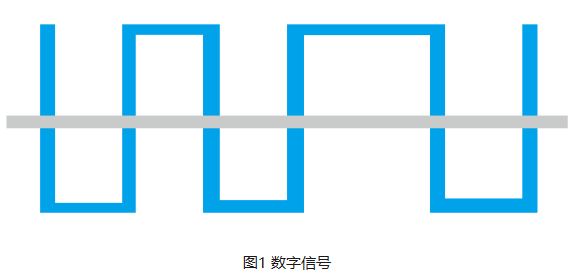
Many people confuse digital quantities with switch quantities or analog quantities. Digital quantities are discrete physical quantities in both time and magnitude, and the signals they represent are digital signals. Digital quantities are signals composed of 0s and 1s, encoded into regular patterns. Analog quantities that have been quantized become digital quantities.
Analog Quantity:
The concept of analog quantities corresponds to digital quantities, yet they can be converted back into digital quantities after quantization. Analog quantities are physical quantities that are continuous in both time and magnitude, and the signals they represent are analog signals. During their continuous variation, every value of an analog quantity represents a specific, meaningful physical quantity, such as temperature, voltage, or current.

Switching Signal:
Typically refers to the "on" and "off" states of a contact. In computer equipment, these states are often represented as "0" or "1". Switching signals are categorized into active and passive switching signals. An active switching signal refers to a powered signal in its 'on' or "off" state, technically termed a step signal. It can be understood as a pulse-like signal carrying voltages such as 220VAC, 110VAC, 24VDC, 12VDC, etc. Passive switch signals refer to signals that are not powered during the "on" and "off" states, commonly known as dry contacts. The resistance test method yields a resistance value of either zero or infinite.

Pulse Quantity:
A pulse quantity refers to the signal quantity where instantaneous voltage or current abruptly changes from one value to another. After quantization, if this change persists in a regular pattern, it constitutes a digital quantity. If it transitions from zero to a fixed value and remains unchanged, it is classified as a switch quantity.
