




Introduction to RS-485
If you're already familiar with RS-232, you probably have some understanding of it. You can think of RS-485 as RS-232's "little brother"-the difference is that this younger sibling is even more powerful than its older brother, thanks to its significantly faster data transfer rates. What makes RS-485 more advanced than RS-232 is that it not only supports point-to-point communication between individual devices but also provides a communication bus capable of connecting multiple devices simultaneously.
Like RS-232, RS-485 does not have a standardized connector. Often, we use older DB9 pin connectors, or in some applications, terminal blocks instead of connectors. This has helped make RS-485 a widely used and versatile form of serial communication.
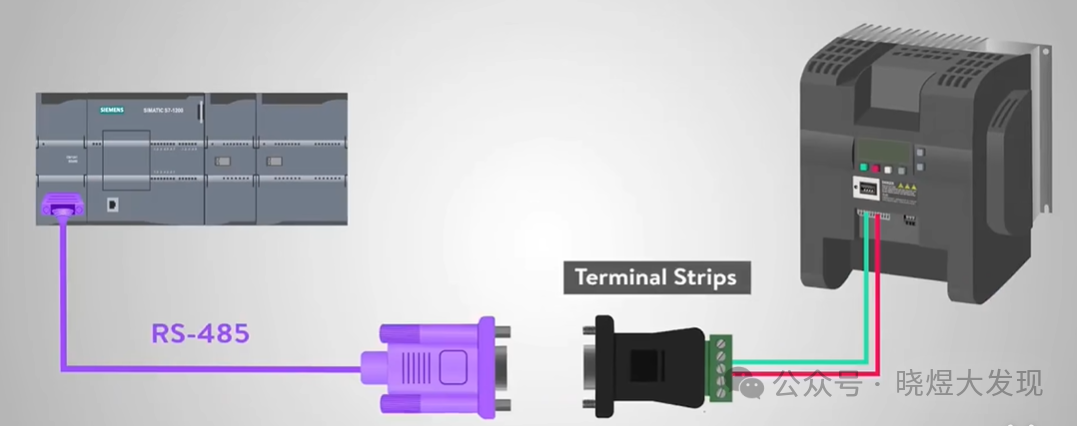
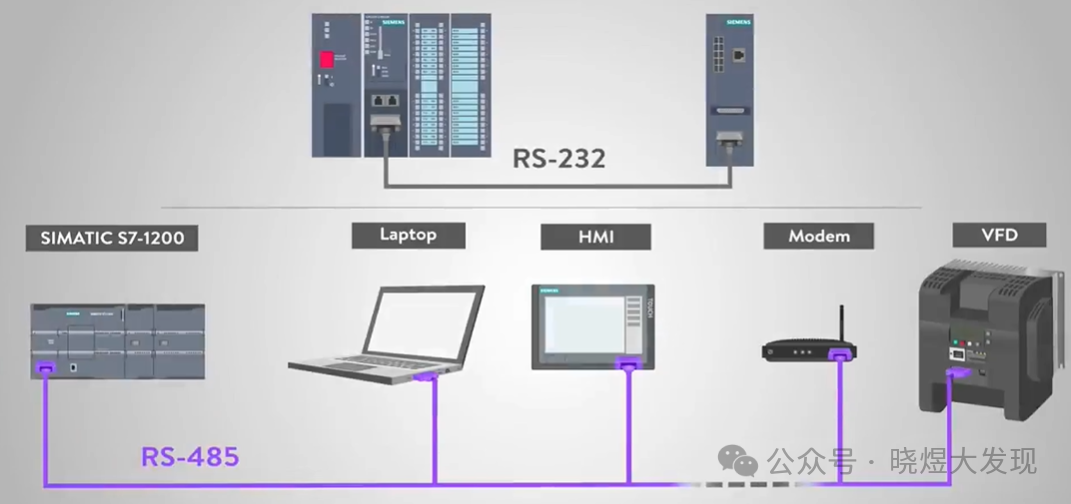
It is a serial communication protocol that uses differential signals, transmitting data over a pair of twisted wires, one of which is designated as A and the other as B. This differential signal transmission method gives RS-485 significant advantages in terms of noise immunity and long-distance communication
Unlike RS-232, RS-485 is not limited to a cable length of approximately 15 meters; its maximum cable length is typically 1,200 meters, or about 4,000 feet.
Another advantage over RS-232 that I mentioned earlier is the number of devices that can be connected. RS-485 can handle up to 32 connected devices, while RS-232 can handle only one. This allows users in manufacturing facilities to connect larger applications and entire machines using a single protocol.
Key Features of RS-485
Excellent Noise Immunity: RS-485 uses differential signal transmission and twisted-pair cables as the transmission medium, effectively suppressing common-mode interference. Its voltage range is typically ±1.5 V to ±6 V, making it well-suited for industrial environments.
High Number of Connections: RS-485 supports half-duplex communication, allowing the same pair of differential lines to be used alternately for transmitting or receiving data. Through a bus arbitration mechanism, it allows multiple devices to share the line, making it suitable for building network topologies. RS-485 employs a multipoint bus structure, supporting up to 32 devices (or up to 256 when extended via repeaters) sharing the bus, with any device capable of acting as a master node to transmit data.
Strong Long-Distance Transmission Capability: The maximum transmission distance for RS-485 can reach 1,200 meters (with data rate inversely proportional to distance); at short distances, the data rate can reach 10 Mbps, while at long distances, it drops to approximately 100 kbps
What can I use serial communication-especially RS-485-for?
In the field of automation, a very common example is the remote control of VFDs (variable frequency drives). We simply refer to them as motor drives. A simple network connecting a PLC, VFD, and HMI enables remote control of the drives in an industrial environment
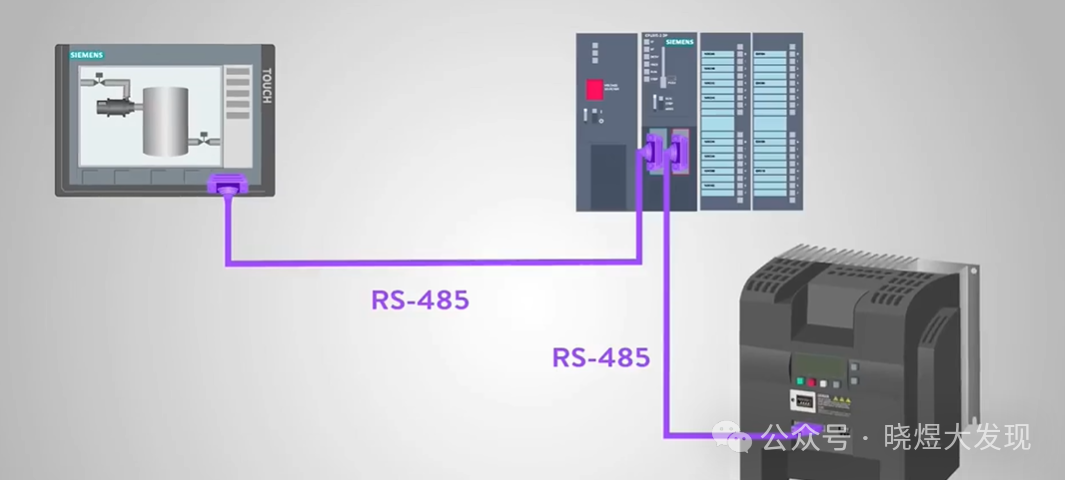
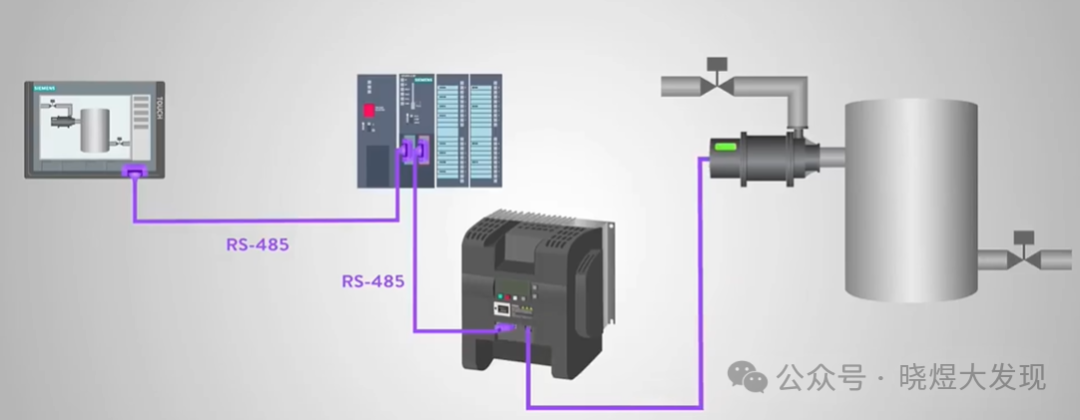
Suppose you are monitoring a water pump that fills a tank, and you believe the filling rate is not fast enough to meet demand. Via the RS-485 network, you can remotely monitor and control the pump from the control center. This is possible because the HMI is connected to the PLC via RS-485, and the PLC is also connected to the VFD via RS-485. The PLC is programmed to monitor the water level in the tank and, if necessary, allows for manual flow control. All of this enables you to resolve the issue by using RS-485 communication to increase the speed of the VFD that controls the pump.
As a result, RS-485 is widely used in multi-node industrial networks, such as PLC control systems, building automation (BACnet), and smart meter data collection. These applications require long-distance transmission, high immunity to interference, and the ability to support multi-node communication, making RS-485 the ideal choice to meet these needs.