


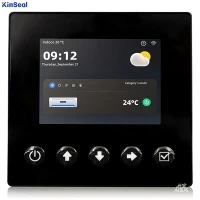


In the ever-evolving landscape of the food industry, Industrial PCs (IPCs) have emerged as indispensable tools, revolutionizing the way food machinery operates. These powerful computing devices are tailored to meet the unique challenges of food processing, offering a host of benefits that contribute to efficiency, precision, and overall improvement in the manufacturing process.
One of the primary advantages of integrating IPCs into food machinery is their robust computing power. These high-performance systems can handle complex algorithms and data-intensive tasks, providing the necessary computational muscle for intricate processes within the food production chain. From recipe management to real-time data analysis, IPCs empower food manufacturers to optimize their operations for enhanced productivity.
Precision is a critical factor in the food industry, and IPCs excel in delivering accurate and reliable control. Equipped with advanced sensors and interfaces, these industrial computers enable precise monitoring of parameters such as temperature, pressure, and flow rates. This level of control ensures that food machinery operates within specified parameters, guaranteeing the consistent quality of the final product.
The adaptability of IPCs is another key feature that sets them apart in the context of food machinery. With modular designs and customizable software, these systems can be easily tailored to accommodate the specific needs of different food processing applications. Whether it's a change in recipe, production scale, or regulatory requirements, IPCs offer the flexibility to adjust and reconfigure, allowing manufacturers to stay agile in a dynamic industry.
In the realm of user interface, IPCs provide intuitive touchscreens and graphical interfaces that simplify operation and monitoring. Operators can access real-time data, visualize production processes, and make informed decisions promptly. This user-friendly interaction enhances overall system usability, reducing the learning curve for operators and minimizing the risk of errors in food machinery operations.
Furthermore, IPCs contribute to the integration of Industry 4.0 principles in the food manufacturing sector. Through connectivity features like Industrial Internet of Things (IIoT) and data exchange protocols, these computers enable seamless communication between different components of the production line. This interconnectedness facilitates data-driven decision-making, predictive maintenance, and the overall optimization of the food manufacturing process.
In conclusion, Industrial PCs have become pivotal in advancing food machinery, offering a comprehensive solution to the challenges faced by the industry. From enhancing computational capabilities to ensuring precision, adaptability, and connectivity, IPCs contribute to a new era of efficiency and innovation in food processing. As we celebrate the integration of these technologies into the food manufacturing landscape, it's evident that IPCs will continue to play a vital role in shaping the future of the industry.