





A load switch (LoadSwitch) is an electronic component whose primary function is to control the on/off state of a load in a circuit; it can connect or disconnect the load from the circuit. Load switches are widely used in electronic devices, industrial automation, automotive electronics, communications equipment, the Internet of Things (IoT), and other fields. Next, we will explain the principle behind load switches and how to determine whether they are functioning properly.
A load switch is an integrated electronic relay that uses an internal switch to connect and disconnect the system's power rail. Similar to a knife switch, it also incorporates numerous auxiliary protection functions.
This internally integrated switch can be either an NMOS transistor or a PMOS transistor. Different types of transistors result in different system architectures; generally, using a PMOS transistor results in slightly lower power consumption, while using an NMOS transistor allows the system to operate at a lower voltage.
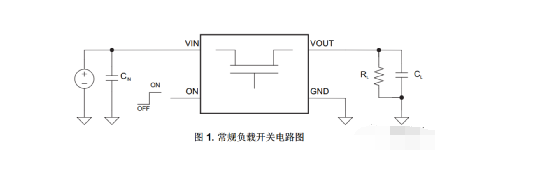
Most load switches have four basic pins: VIN, VOUT, EN, and GND. When enabled, the load switch turns on, allowing current to flow from VIN to VOUT to power the load.
How to Determine the Condition of a Load Switch
1. Visual Inspection
A visual inspection of the load switch primarily involves checking for damage such as deformation, cracks, or scratches. Additionally, check for obvious rust or corrosion on the load switch and ensure that the connections are secure.
2. Electrical Parameter Check
Use a multimeter to check the load switch's electrical parameters, primarily measuring its on-resistance, insulation resistance, overcurrent protection threshold, and other parameters to determine whether the load switch is functioning properly.
3. Repeated Switching Test
Repeated switching tests can be used to determine whether the load switch's switching performance is normal. Generally, the load switch can be operated manually or controlled via an interface board. During testing, pay attention to the speed and reliability of the switching operation.
4. Withstand Voltage Test
The withstand voltage test is primarily conducted to verify whether the load switch's insulation performance meets specifications. By subjecting the load switch to a high-voltage current test, it is possible to determine whether issues such as leakage current exist. The above are the primary methods for determining the condition of a load switch. It is important to note that extreme caution must be exercised when operating the load switch to prevent dangerous situations such as short circuits.
Determining the condition of a load switch primarily involves a combination of methods, including visual inspection, electrical parameter checks, repeated switching tests, and withstand voltage tests. Only through proper care and maintenance during use can a load switch perform optimally, ensuring its safety, reliability, and long-term stability.