




Industrial motion control covers a wide range of applications, from inverter-based fan or pump control, to factory automation with more sophisticated AC drive controls, to advanced automation applications such as robotics with complex servo controls. These systems require detection and feedback of many variables such as motor winding current or voltage, DC bus current or voltage, rotor position and speed. The selection of variables and the required measurement accuracy depends on the end-application requirements, system architecture, target system cost, or system complexity. There are other considerations, such as value-added features like condition monitoring. With electric motors reportedly consuming 40% of the world's electricity, international regulations have increased the focus on system efficiency across industrial motion applications (see Figure 1).
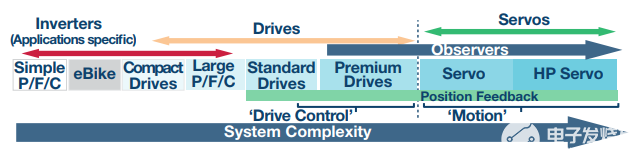 Figure 1. Range of industrial drive applications
Current and voltage detection techniques in various motor control signal chain topologies vary depending on motor power ratings, system performance requirements, and the end application. In this case, the motor control signal chain implementation varies by sensor selection, current isolation requirements, ADC selection, system integration, and system power/ground partitioning. While isolation requirements typically have a significant impact on the final circuit topology and architecture, this paper will focus on improving current detection measurements (as one of the influencing factors) to achieve a more efficient motor control system.
I and V Measurements
The generalized motor control signal chain is shown in Figure 2. Signal conditioning to achieve high-fidelity measurements is no easy task. Phase current detection is particularly challenging because this node is connected to the same circuit node as the gate driver outputs within the core of the inverter module, and therefore has the same requirements in terms of isolating voltages and handling switching transients.
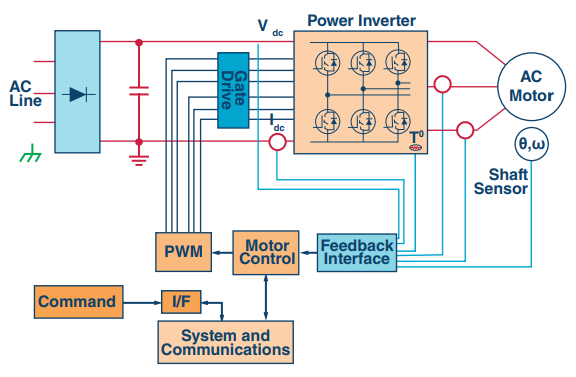 Figure 2. Generalized motor control signal chain
The most commonly used current sensors in motor control are shunt resistors, Hall Effect Sensors (HES) and Current Transformers (CT). Although shunt resistors do not provide isolation and incur losses, they are the most linear of all sensors, have the lowest cost, and are suitable for both AC and DC measurements. The reduced signal level required to limit shunt power losses typically limits shunt applications to 50 A or less. CTs and HESs provide inherent isolation, allowing them to serve high current systems, but are more costly due to poor initial accuracy or poor temperature accuracy and result in solutions that are less accurate than those that can be achieved with shunt resistors. In addition to the sensor types, there are several motor current measurement nodes to choose from (as shown in Figure 3), with direct in-phase winding measurements being the ideal choice for the highest performance systems.
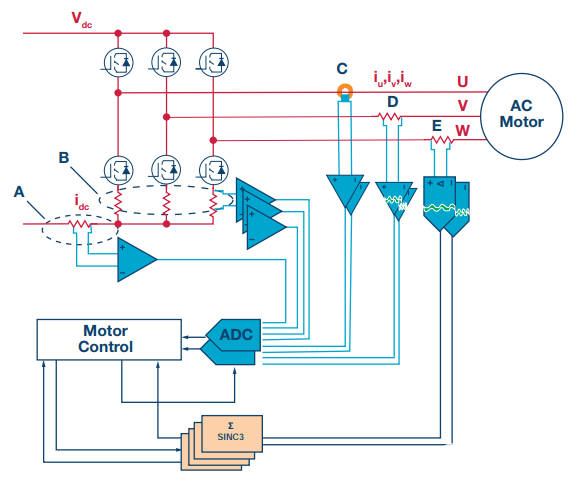 Figure 3. Isolated and non-isolated motor current feedback
There are many topologies for sensing motor current and many factors to consider such as cost, power consumption and performance levels, but a key goal for most system designers is to improve efficiency within their cost targets.
From HES to Shunt Resistors
Shunt resistors are coupled to isolated sigma-delta (Σ-Δ) modulators to provide the highest quality current feedback (current levels low enough). There is a significant trend for system designers to move from HES to shunt resistors, and another trend to move to isolated modulators rather than isolated amplifier methods. Often, when system designers replace HES with shunt resistors, they choose isolation amplifiers and continue to use the ADCs previously used in HES-based designs. in this case, performance will be limited by the isolation amplifier, regardless of the analog-to-digital performance.
Replacing the isolated amplifier and ADC with an isolated sigma-delta modulator will eliminate the performance bottleneck and greatly improve the design, typically by changing it from 9-bit to 10-bit mass feedback to 12-bit levels. The analog overcurrent protection circuitry (OCP) can also be eliminated, as the digital filters required to process the sigma-delta modulator outputs can also be configured to enable fast OCP loops.
Available Σ-Δ modulators may have a differential input range of ±250 mV, where ±320 mV full scale is used for OCP, ideal for resistive shunt measurements. The analog inputs are continuously sampled by the analog modulator, and the input information is contained in a digital output stream with a data rate of up to 20 MHz. The raw information can be reconstructed with appropriate digital filters. Since conversion performance can be traded off against bandwidth or filter bank delay, coarser, faster filters can provide fast response OCPs on the order of 2 μs, ideal for IGBT protection.
Reducing Shunt Resistor Size
From a signal measurement perspective, there are some key challenges in shunt resistor selection, as there is a trade-off between sensitivity and power consumption. Nonlinearity due to self-heating effects is also a challenge when using higher value resistors. Designers are faced with trade-offs that are further exacerbated by the fact that a shunt size often needs to be selected to serve many models and motors at different current levels. Maintaining dynamic range in the face of peak currents that can be several times the motor's rated current and the need to reliably capture both is a challenge.
Faced with these challenges, system designers are looking for superior sigma-delta modulators with wider dynamic range or improved signal-to-noise and distortion ratio (SINAD). To date, isolated Σ-Δ modulator products have offered guaranteed performance with 16-bit resolution and up to 12 effective bits (ENOB).
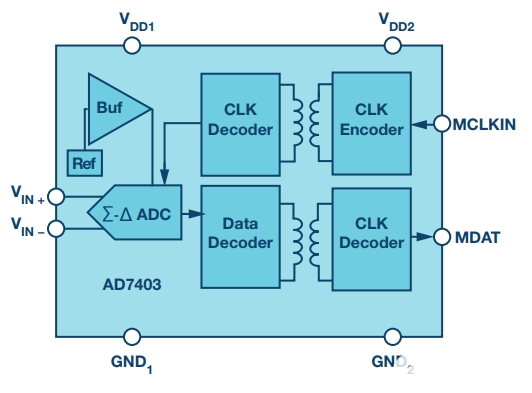 Figure 4.The AD7403 is a high-performance, second-order sigma-delta modulator
High Performance Isolated Sigma Delta Modulator
Higher-performance isolated sigma-delta modulators will support a wide range of needs in industrial motor control designs and improve the power efficiency of motor drives by reducing shunt resistor size.An industry example is ADI's AD7403 modulator (see Figure 4). It is the next generation of the AD7401A and offers a wider dynamic range at the same external clock rate of 20 MHz. It allows for more flexible shunt sizing options and allows the use of shunt resistors instead of HESs at higher current levels. the chip's ENOB is typically 14.2 bits. Dynamic response can also be improved by reducing measurement delay. The device also features an isolation scheme with a higher voltage-in-continuous-operation (VIORM) than its predecessor, which improves system efficiency through higher DC bus voltages and lower currents.