


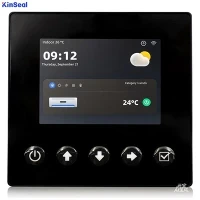


Optical Transmittance Measuring Instrument (also known as Light Transmittance Tester) is an instrument specialized in measuring the light transmittance of materials. The following is a detailed analysis of its technical principle and application scenarios:
Technical Principle
The technical principle of Optical Transmittance Tester is mainly based on the principle of light transmission. When light passes through a material, the phenomena of absorption, reflection and transmission will occur. The instrument calculates the transmittance of a substance by measuring the ratio of the intensity of the transmitted light to the intensity of the incident light. The specific process is as follows:
- Photoelectric conversion: the photoelectric detector is utilized to convert the light signal into an electrical signal. This conversion process has a high degree of sensitivity and stability, and is able to accurately reflect changes in light intensity.
- Data processing: The data processing system amplifies, filters and calibrates the measured electrical signals to eliminate the influence of noise and interference factors. At the same time, the algorithm calculates the ratio of transmitted light intensity to incident light intensity to get the transmittance of the sample.
- Multi-wavelength measurement: Some optical transmittance meters support multi-wavelength measurement function, which allows you to choose different light sources and filters to cover multiple wavelength ranges, such as UV, VIS and IR, in order to meet the transmittance measurement requirements of different materials.
Application Scenarios
Optical Transmittance Measuring Instrument has a wide range of application scenarios, covering a variety of industries and fields:
- Construction: In the construction industry, optical transmittance meters are used to test the transparency of building materials such as windows, skylights and other transparent components to ensure they meet quality and performance standards. This is particularly important for buildings where the amount of light entering the building needs to be controlled, such as exhibition halls and libraries. In addition, it can be used to test the light transmittance of various types of architectural glass, providing architects and developers with a scientific basis for selecting materials and improving building quality.
- Photovoltaic industry: In the solar photovoltaic industry, the optical transmittance measuring instrument is mainly used for measuring the photoelectric conversion efficiency of solar cells and modules. By measuring the intensity change of light penetrating the solar panel, it can assess its photoelectric conversion efficiency, which is of great significance for improving the efficiency of solar energy utilization. At the same time, it can also accurately measure the transmittance of photovoltaic glass, to help manufacturers optimize the production process.
- Automotive industry: In the field of automotive manufacturing and testing, optical transmittance measuring instrument can be used to measure the transmittance of automotive glass and solar film. Automotive glass should not only have good light transmission, but also meet the requirements of safety and heat insulation. The instrument can be used to study new optical materials, analyze the optical properties of materials, etc., providing accurate data support for researchers.
- Aerospace: In the field of aerospace, optical transmittance measuring instrument can be used for testing the light transmittance of materials to ensure that the transparent parts of the aircraft, such as the cockpit cover, windshield glass, etc., have sufficient light transmittance and strength.
- Environmental monitoring: Optical transmittance measuring instrument can be used as a portable optical remote sensing detection and analysis tool, applied to the atmospheric environment, light pollution in the field of pollutant composition analysis and identification and other fields. By measuring the optical properties such as absorption, scattering and transmission of light in the atmosphere, the cleanliness and visibility of the atmosphere can be assessed.
In summary, optical transmittance meters provide an important measurement tool for industry and scientific research with their accuracy, portability and ease of use.