





Linear sensors are a common type of sensor widely used in industrial automation, robotics, transportation, and other fields. They enable real-time monitoring and control by converting physical quantities-such as displacement, velocity, and acceleration-into electrical signals. When installing and using linear sensors, proper wiring is key to ensuring the equipment operates correctly.
The wiring configuration for linear sensors typically includes two interfaces: a power supply interface and a signal input/output interface. The power supply interface generally consists of positive and negative terminals, which must be connected according to the voltage and current parameters specified in the sensor manual. The signal input interface is primarily used to receive signals from the object being measured; it typically comes in two types-differential and single-ended-and the appropriate type must be selected based on the sensor model. The output interface usually comes in two types-analog and digital-and can be connected according to actual requirements.
When installing a linear sensor, it is important to pay attention to phase sequence, polarity, and shielding. Phase sequence refers to the order in which the power supply is connected; different sensor models may have different phase sequence requirements. Polarity refers to how the positive and negative terminals of the power supply and the signal lines are connected; incorrect polarity connections may damage the sensor. Shielding refers to connecting the sensor's signal lines to ground to reduce the impact of interference signals.
The following is a basic circuit connection diagram to help readers better understand how to wire a linear sensor. In the diagram, the sensor's power supply is connected to the power connector via wires, the signal lines are connected to the main controller via the input connector, and the output connector is connected to a display device or actuator.
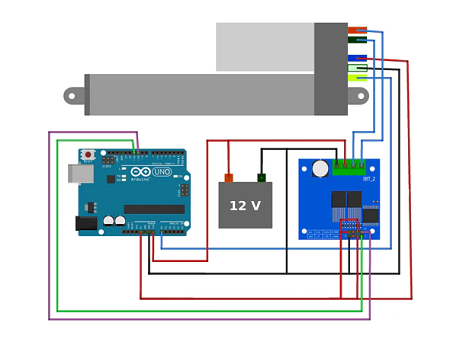
If a fault occurs when connecting a linear sensor, try the following troubleshooting steps: Check that the power supply connections are secure and verify that the supply voltage and current meet the specifications; check that the signal wires are connected correctly, paying attention to phase sequence, polarity, and shielding; inspect the sensor itself for issues such as damage or wear.
In summary, proper wiring of linear sensors is key to ensuring the equipment operates normally. When installing and using linear sensors, connections must be made strictly in accordance with the manual's requirements, paying close attention to details such as phase sequence, polarity, and shielding. Additionally, any malfunctions that occur must be promptly resolved to ensure the equipment's stability and reliability.