Passive crystal oscillators are primarily used in low-cost communication devices, toys, and small electronic products; active crystal oscillators are primarily used in audio and video equipment, industrial automation, and control equipment. The differences between active and passive crystal oscillators are shown in the table below:
| No. | Comparison Item | Passive Crystal Oscillator | Active Crystal Oscillator |
| 1 | Alias | Crystal Unit | Oscillator |
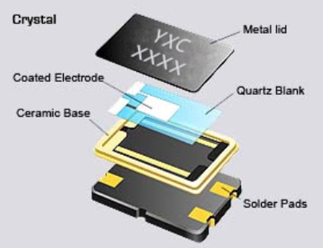
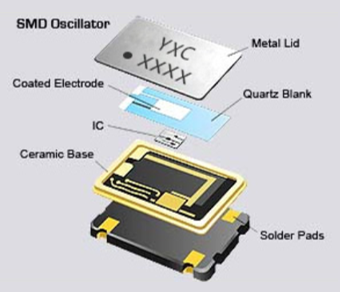
| 2 | Structure | Just a crystal | Encapsulating the "crystal + oscillator circuit" together |
| 3 | Internal Structure Diagram |
|
 |
| 4 | Number of Pins | 2, 4 | 4, 6, 8 |
| 5 | Vibration Mode |
Generating an oscillation signal using a clock circuit |
It can generate an oscillation signal on its own, without relying on an external circuit |
| 6 | Highest Precision | ±10PPM | ±0.1PPM |
| 7 | Signal Quality | Poor | Fair |
| 8 | Circuit Design | Simple | Complex |
| 9 |
Application Scenarios |
Applications with low power consumption and cost requirements, and where stability is not a top priority |
Applications requiring high clock signal accuracy and stability |
| 10 | Flexibility | High (frequency can be adjusted by modifying the external circuitry) | Low (signal level is fixed, offering little flexibility) |
| 11 | Stability | Relatively low (affected by environmental temperature, supply voltage, and other factors) | High |