


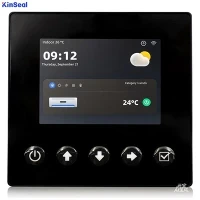


Industrial control cabinets are devices used in industrial automation control systems, serving multiple functions and purposes.
Centralized Control Function
The core role of industrial control cabinets is to achieve centralized control over the entire industrial automation system. Through various control devices within the cabinet, such as PLCs, DCS, and SCADA systems, real-time monitoring and control of production lines, equipment, and process flows can be realized. This centralized control approach enhances production efficiency, reduces human intervention, and lowers production costs.
System Integration Function
Industrial control cabinets integrate diverse control devices, sensors, and actuators into a comprehensive control system. This integrated approach simplifies system architecture, reduces equipment count, lowers complexity, and enhances overall reliability and stability.
Data Acquisition and Processing Capabilities
Industrial control cabinets typically incorporate data acquisition cards, analog input/output cards, and similar devices to capture, convert, and process signals from diverse sensors. Analysis and processing of this data provide real-time visibility into production parameters, supporting informed manufacturing decisions.
Communication and Networking Capabilities
Industrial control cabinets usually feature multiple communication interfaces, such as Ethernet, serial ports, and RS485, enabling communication and data exchange with host computers, remote monitoring systems, enterprise resource planning systems, and more. These communication and networking capabilities enhance system openness and scalability, facilitating information sharing and remote control.
Safety Protection Function
Industrial control cabinets are typically constructed from high-strength materials like stainless steel or aluminum alloy, offering excellent resistance to impact, corrosion, and electromagnetic interference. Additionally, the cabinet incorporates safety devices such as power surge protection, overload protection, and short-circuit protection to ensure the secure and stable operation of the control system.
Human-Machine Interaction Capabilities
Industrial control cabinets are typically equipped with input devices like touchscreens, keyboards, and mice, alongside output devices such as monitors, indicator lights, and buzzers. This enables real-time interaction with operators. Such interaction enhances operational convenience and intuitiveness while reducing operational complexity.
Modular Design
Industrial control cabinets adopt a modular design, allowing flexible selection and combination of various control modules based on specific application requirements. This modular approach enhances system customizability and scalability, meeting diverse customer needs.
Energy Efficiency and Environmental Protection
Industrial control cabinets incorporate energy-saving and eco-friendly considerations throughout design and manufacturing. Examples include low-power control devices, optimized thermal management, and environmentally responsible materials. This design reduces system energy consumption and minimizes environmental impact.
Easy Maintenance and Upgrades
Industrial control cabinets employ standardized, modular designs where components are easily removable and replaceable. This design reduces maintenance complexity and improves efficiency. Additionally, the system's scalability allows for convenient upgrades and expansions to accommodate technological advancements and changing requirements.
High Adaptability
Industrial control cabinets demonstrate exceptional adaptability, serving diverse industrial automation sectors including manufacturing, power generation, petrochemicals, metallurgy, and building materials. They reliably perform in harsh environments-such as high temperatures, humidity, or dust-and meet specialized requirements for precision, speed, and stability.
Enhanced Production Efficiency
Through centralized control, real-time monitoring, and data analysis capabilities, industrial control cabinets enable timely identification and resolution of production issues, reducing downtime and boosting production efficiency.
Lowered Production Costs
Industrial control cabinets facilitate automated production, minimizing manual intervention and reducing labor expenses. Simultaneously, by optimizing and controlling production processes, they decrease consumption of raw materials and energy, further lowering overall production costs.
Enhancing Product Quality
Industrial control cabinets enable precise process control, ensuring product consistency and stability to elevate quality standards. Simultaneously, analyzing and processing production data allows for the timely detection of quality issues and implementation of corrective measures.
Strengthening Competitive Advantage
By adopting industrial control cabinets, enterprises can automate and intelligentize production processes, thereby boosting efficiency, improving product quality, and reducing costs-ultimately enhancing market competitiveness.
Promoting Industrial Upgrading
The adoption of industrial control cabinets drives traditional industries toward automation and intelligent development, facilitating industrial restructuring and upgrading while injecting new vitality into economic growth.
In summary, industrial control cabinets play a vital role in industrial automation. With the advancement of technologies like Industry 4.0 and smart manufacturing, their application will expand significantly, delivering greater convenience and benefits to industrial production.