


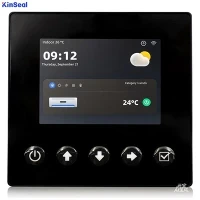


Industrial control machine generally refers to industrial control computer, is a bus structure, the production process and its electromechanical equipment, process equipment for detection and control of the tool in general. Industrial control machine has important computer attributes and features, such as: with a computer CPU, hard disk, memory, peripherals and interfaces, and real-time operating system, control networks and protocols, computing power, friendly human-machine interface.
The main categories of industrial controllers are: IPC (PC bus industrial computer), PLC (programmable control system), DCS (decentralized control system), FCS (fieldbus system) and CNC (numerical control system) five.
IPC (PC bus industrial computer): IPC is an acronym for IP Camera, IP is the Internet Protocol, Camera is a camera, camera, IP Camera as the name suggests is a network camera, it is a combination of traditional video cameras and network technology produced by a new generation of cameras.
PLC (Programmable Control System): Programmable Logic Controller (Programmable Logic Controller, PLC), a microprocessor with a digital algorithm for automation control controllers can be loaded into the memory at any time control instructions for storage and execution. Programmable controller consists of CPU, instruction and data memory, input/output interface, power supply, digital and analog conversion and other functional units.
DCS (Decentralized Control System): DCS generally refers to decentralized control system (centralized control system). Decentralized control system is a new generation of instrumentation control system based on microprocessor, using decentralized control functions, centralized display operation, taking into account the design principles of separation and autonomy and comprehensive coordination. The centralized control system is abbreviated as DCS, which can also be directly translated as "decentralized control system" or "distributed computer control system". It adopts the basic design idea of decentralized control, centralized operation and management, and the structural form of multi-layer hierarchical, cooperative and autonomous. Its main feature is its centralized management and decentralized control. DCS has been widely used in various industries such as electric power, metallurgy, petrochemical and so on.
FCS (Fieldbus System): Fieldbus Control System (Fieldbus Control System) is an all-digital serial, two-way communication system. Measuring and control devices such as probes, exciters and controllers can be connected, monitored and controlled within the system. In the grading of the plant network, it serves both as a localized network for process control (e.g., PLC, LC, etc.) and application of intelligent instrumentation (e.g., frequency converters, valves, barcode readers, etc.), and has embedded functionality for distribution of control applications over the network.
CNC (numerical control system): CNC system is the abbreviation of digital control system, the English name is (Numerical Control System), according to the control program stored in the computer memory, the implementation of some or all of the numerical control functions, and is equipped with interface circuits and servo-driven devices of the special computer system. Through the use of digital, text and symbols composed of digital instructions to achieve one or more mechanical equipment action control, it is usually controlled by the position, angle, speed and other mechanical quantities and switching quantities.
Industrial control has always been the bottleneck restricting China's equipment industry and even product upgrading. Equipment manufacturing industry is the core and foundation of industry, determines the level of national industry and science and technology, as well as its position in the global division of labor.
For machine tools for a class of industrial mother, as a domestic manufacturer, Siemens or Mitsubishi need to provide the overall motion control solutions, core motion control products such as linear motors, AC servo motors and systems for precise motion control of core components or application solutions are provided by foreign multinational corporations as a whole, from the product to the technology is designed by the foreign enterprises. Domestic manufacturers engaged in machine tool manufacturing, more from the application point of view to understand the function of these key components, how to use, and ultimately integrate them into a set of machinery and equipment. This is the gap in the manufacturing industry and the direction of catching up.