


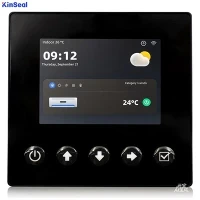


As a physical device, a sensor typically consists of sensitive components that primarily convert detected information into electrical signal outputs according to specific principles. This enables the transmission, storage, display, recording, and control of information.
The official definition of a sensor is a detection device capable of perceiving measured information and converting this perceived information into electrical signals or other required forms of output according to specific principles. This enables the transmission, processing, storage, display, recording, and control of information. Key characteristics of sensors include miniaturization, digitalization, intelligence, multifunctionality, systematization, and networking. The existence and advancement of sensors have endowed objects with sensory capabilities akin to touch, taste, and smell, gradually bringing them to life.
Sensors first emerged in industrial production, primarily used to enhance manufacturing efficiency. However, with the continuous development of integrated circuits and technological information, sensors have gradually diversified and expanded globally. Within this landscape, the internet-once confined to human-to-human connections-has now extended and expanded into the Internet of Everything. Industry experts project that by 2020, the global IoT market will reach trillions of dollars, marking the next major growth opportunity for the communications industry.
Historically, sensor technology has evolved through three distinct eras: structural sensors, solid-state sensors, and intelligent sensors. The integration of MEMS technology has further propelled the sensor field into the global spotlight. Surveys indicate that domestic sensors are primarily applied in automotive electronics, communication electronics, consumer electronics (smartphones and wearable devices, etc.), and industrial production markets. Based on current market usage, mainstream sensors in China include temperature sensors, pressure sensors, light sensors, barometric pressure sensors, and gravity sensors.
What are the new applications for sensors?
With the continuous advancement of information technology, traditional sensors capable only of perceiving environmental parameters can no longer meet development demands. Against this backdrop, new sensor types like smart sensors, angular velocity sensors, proximity sensors, and fiber optic sensors have emerged in the market. How are they being utilized in the information sector?
Smart Sensors: Capable of collecting, processing, and exchanging information, these are products of sensor integration combined with microprocessors. They are primarily used in industrial automation and battery systems for new electric vehicles.
Angular Velocity Sensors: Primarily utilizing the Coriolis force principle, these sensors simplify equipment structure and circuitry. They are mainly employed in automotive navigation systems and applications requiring precise angular measurement.
Proximity Sensors: Employing infrared ranging technology, these sensors detect obstacles like faces or clothing in front of a phone screen via infrared signals when the user answers a call or places the phone in a pocket. This enables touchscreen deactivation, preventing accidental operations.
Fiber Optic Sensor: Features corrosion resistance, minimal influence from media, and strong electromagnetic interference immunity. Primarily used in copier and financial terminal equipment inspection.
Challenges in Sensor Industry Development
As sensors play increasingly vital roles in industrial, automotive electronics, and smart devices, nations are placing greater emphasis on their advancement. Compared to technologically advanced countries like the U.S., Japan, and Germany, China's sensor industry primarily faces three major challenges:
First, insufficient awareness of developing new products and proprietary intellectual property. Sensors demand high precision and sensitivity, yet over 90% of China's mid-to-high-end sensor products originate from abroad. This long-term reliance has left the domestic sensor industry perpetually at the mercy of foreign suppliers.
Second, unclear product technical standards and insufficient core technologies. In R&D, the absence of clear technical standards results in inconsistent sensor quality. Additionally, inadequate focus on talent cultivation has led to a scarcity of core technologies, perpetuating long-term suppression by foreign markets.
Third, excessive fragmentation among enterprises and weak competitiveness. The prevalence of numerous small and medium-sized enterprises (SMEs) alongside a scarcity of large enterprises has left the domestic sensor market with overall insufficient strength.