


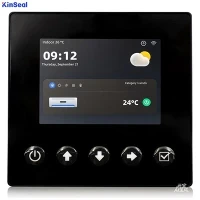


Soft PLC is a programmable logic controller based on general-purpose hardware and software implementation, which is a kind of innovative PLC.Compared with hard PLC, soft PLC has better flexibility, scalability and customizability, which can be quickly configured and deployed according to the user's needs, and is suitable for a variety of automation control fields. In this paper, we will compare and analyze soft PLC and hard PLC to better understand their advantages and disadvantages.
First, the difference between soft PLC and hard PLC
The most significant difference between soft PLC and hard PLC is its hardware platform. The program of hard PLC is embedded in the firmware, which is pre-configured during the manufacturing of the equipment and cannot be changed. Soft PLCs, on the other hand, realize control functions through software installed on general-purpose hardware, so they can be adjusted and updated at any time according to user needs.
In addition, soft PLCs have more powerful CPU performance, storage capacity and a wider operating temperature range. They usually come standard with more input and output ports and support multiple protocols and networks.
Soft PLCs promote high customizability and flexibility in implementing automated control systems, while also reducing cost, risk and engineering time.
Second, the advantages of soft PLC
1. Flexible Configuration: Soft PLC uses common hardware and software, which can be quickly configured and deployed according to user needs, and can be expanded and upgraded.
2. better customizability: can be customized according to specific requirements of the user's program, with a higher degree of customization and flexibility.
3. More accurate and convenient diagnosis: Soft PLC provides more specific fault diagnosis information, which can help users quickly find out the cause of the fault and troubleshoot the problem.
4. Easier to Operate: Soft PLC has a friendly operator interface, which is easier to operate and maintain.
5. compatibility: soft PLC can adapt to the needs of a variety of engineering control systems, support a variety of communication protocols and networks, and third-party software and hardware compatibility is stronger.
6. can use a standard PC: soft PLC can use a standard PC processor and software, relatively low cost, can help users better control costs.
Third, the advantages of hardware PLC
1. Stability: The core components of hardware PLC are separate electronic components, so it has higher stability and reliability.
2. better real-time: hardware PLC can be controlled in real time, and to ensure the accurate execution of the program, can retain the process variables, better control of the production process.
3. Anti-interference capability: Hardware PLC hardware and firmware are designed to resist certain external wireless interference.
4. Deeply optimized operating system: The operating system of hardware PLCs is specially optimized for PLCs to support special features such as real-time multitasking, which is considered by the industry to be more stable and secure in performance.
Fourth, the conclusion
In practice, soft PLC and hard PLC can be selected according to different automation control fields and specific applications. Soft PLC is suitable for places with higher requirements, complex processes, and frequent changes in production needs. Hard PLC is more suitable for places with more delicate and reliable requirements and harsh environmental requirements. Overall, soft PLCs are a more cost-effective option, especially when there is a need for extensive customization.