





Abstract
A current transformer is a critical component used to measure current and is widely used in power systems, industrial automation, and other fields. This paper focuses on current transformer wiring diagrams and provides a detailed discussion from four perspectives.
I. Overview of Wiring Diagrams
A wiring diagram is a graphical representation of how a circuit is connected. For current transformers, the wiring diagram primarily illustrates the connection methods for the input and output terminals. In practical applications, different types of wiring configurations can be adopted depending on specific requirements and environmental conditions. Common types include single-phase three-wire and three-phase four-wire configurations. Each of these wiring configurations has its own applicable scenarios and characteristics.
The single-phase three-wire configuration is the most common and straightforward wiring method. It transmits signals via two conductors on the low-voltage side and uses a single conductor circuit on the high-voltage side to perform measurement tasks. The three-phase four-wire configuration, on the other hand, is suitable for higher-power systems, requiring two circuits on the high-voltage side to ensure measurement accuracy and safety.
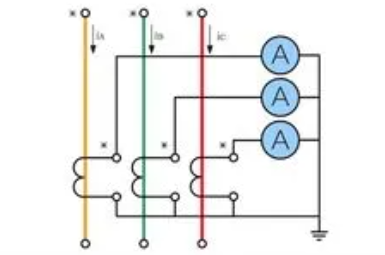
II. Input Connections
In current transformers, the input terminals are typically connected directly to the object under test or indirectly via other devices. For direct connections, care must be taken to select appropriate wires and connection methods to ensure the stability and accuracy of signal transmission. For indirect connections, the impact of other devices-such as filters and amplifiers-on the signal must be taken into account.
In addition, attention must be paid to the matching between the current transformer and the object under test at the input end. Current transformers of different types and specifications have different ratings; therefore, the appropriate model must be selected based on the current range of the object under test.
III. Output Connections
The output end processes the signal obtained after transformation and transmits it to downstream equipment or systems. Output-end connections typically involve amplification, filtering, and isolation. These steps are designed to improve signal quality and ensure that the signal can be properly received and processed by downstream equipment.
Furthermore, impedance matching issues may arise at the output end. Since current transformers inherently possess certain impedance characteristics, the output circuit must be properly designed to achieve impedance matching with downstream equipment and improve overall system efficiency.
IV. Safety Measures
When using current transformers, a series of safety measures must be implemented to ensure the safety of both operators and equipment. First, ensure that the current transformer has good insulation performance to prevent accidents such as electrical leakage. Second, during the wiring process, take care to connect the wires correctly to avoid errors such as short circuits or reversed connections.
Furthermore, during operation, the condition of the current transformer must be regularly inspected and maintained to ensure it functions properly. At the same time, when operating in high-voltage environments, anti-static gloves and footwear must be worn, and operations must strictly adhere to relevant safety regulations.
Summary
Through this detailed explanation of current transformer wiring diagrams, we have gained an understanding of their importance in practical applications, as well as the scenarios in which different types and connection methods are applicable. We have also clarified the considerations required when connecting the input and output terminals and emphasized the importance of safety measures during use.
Only by correctly understanding and properly applying current transformer wiring diagrams can we better accomplish current signal measurement and transmission tasks, thereby providing stable, reliable, and precise data support across various fields.