





Real-time Transport Protocol (RTP), Real-time Transport Control Protocol (RTCP), Real-time Streaming Protocol (RTSP), and Real-time Messaging and Broadcasting Protocol (RTMP) are core protocols in the field of multimedia communications. They play a crucial role in scenarios such as audio and video transmission, live streaming, and video conferencing. The following provides a detailed analysis of the technical principles, application scenarios, and differences among these protocols.
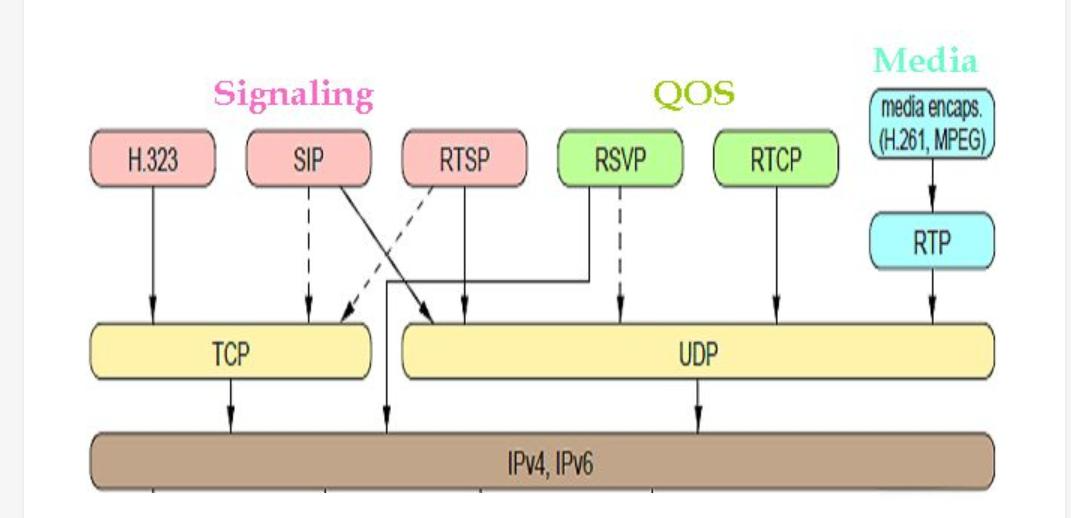
I. RTP (Real-time Transport Protocol)
1. Basic Concepts
RTP is a UDP-based transport protocol specifically designed for real-time data transmission, defined by the IETF in RFC 3550. Its core functions include providing timestamps, sequence numbers, and payload type identifiers to ensure temporal synchronization and packet loss detection for audio/video data. RTP itself does not guarantee Quality of Service (QoS), but enables monitoring and feedback through RTCP.
2. Technical Features
● Timestamp Mechanism: Marks packet generation time to resolve playback desynchronization caused by network jitter.
● Sequence Numbers: Detects packet loss and out-of-order delivery, enabling receiver-side data reassembly.
● Content Type Identifier: Dynamically adapts to different encoding formats (e.g., H.264, AAC).
● Multiplexing: Distinguishes different streams within the same session using SSRC (Synchronization Source Identifier).
3. Application Scenarios
● Video Conferencing: Platforms like Zoom and WebRTC utilize RTP for underlying audio/video stream transmission.
● IP Telephony: VoIP systems rely on RTP for real-time voice communication.
● Live Streaming: Optimizes transmission quality in conjunction with RTCP.
II. RTCP (Real-time Transport Control Protocol)
1. Role and Functions
RTCP is RTP's companion protocol, responsible for transmitting control information rather than media data. Key functions include:
● QoS Monitoring: Provides metrics like packet loss rate and latency through Receive Reports (RR) and Send Reports (SR).
● Synchronization Coordination: Ensures audio-visual synchronization (e.g., lip-sync) in multimedia streams.
● Participant Management: Identifies member status in multi-party sessions.
2. Message Types
● SR (Sender Report): Sender statistics (e.g., bytes sent, timestamps).
● RR (Receiver Report): Receiver feedback on network conditions.
● SDES (Source Description): Participant description information (e.g., username).
● BYE: Session termination notification.
3. Practical Applications
In live streaming scenarios, RTCP assists servers in dynamically adjusting bitrates. For instance, when the receiver reports high packet loss, the sender can reduce resolution to adapt to network conditions.
III. RTSP (Real-time Streaming Protocol)
1. Protocol Positioning
RTSP is an application layer protocol (RFC 2326) that controls media server operations like playback and pause, functioning as a "network remote control." Its characteristics include:
● No transport capability: Relies on RTP/RTCP or TCP for data transmission.
● Stateful protocol: Manages connection lifecycle via session IDs.
2. Interaction Flow
1. OPTIONS: Queries server-supported methods.
2. DESCRIBE: Retrieves media description (e.g., SDP file).
3. SETUP: Establishes transport channel (specifies RTP port).
4. PLAY/PAUSE/TEARDOWN: Controls playback state.
3. Typical Scenarios
● Security Surveillance: Retrieve real-time camera streams via RTSP.
● IPTV: Support interactive control for VOD and live streaming.
IV. RTMP (Real-time Messaging Protocol)
1. Protocol Evolution
Developed by Adobe, RTMP was originally designed for Flash Player-server communication. Though Flash is now obsolete, RTMP remains widely used for live streaming due to its low-latency characteristics.
2. Core Features
● TCP-based: Ensures reliability but incurs higher latency than RTP/UDP.
● Chunking: Divides data into smaller segments to accommodate varying bandwidths.
● Multiplexing: Transmits audio/video, metadata, and control commands over a single connection.
3. Workflow
● Handshake Phase: Client and server exchange C0-C2 packets.
● Connection Phase: Establishes a NetConnection.
● Stream Creation: Transmits media data via NetStream.
4. Modern Applications
● Live Streaming: Tools like OBS push streams to CDNs (e.g., Tencent Cloud, Alibaba Cloud) via RTMP.
● Compatibility Adaptation: Adapt for mobile devices through protocol conversion (e.g., RTMP to HLS).
V. Protocol Comparison and Selection Recommendations
| Agreement | Transport Layer | Primary Use | Delay | Applicable Scenarios |
| RTP | UDP | Real-time audio and video transmission | Low | Video conferencing,VoIP |
| RTCP | UDP | Transmission Quality Feedback | - | For use with RTP |
| RTSP | TCP/UDP | Streaming Media Control | Moderate | Monitoring, On-Demand |
| RTMP | TCP | Live streaming, on-demand streaming | mid-to-high | Live streaming platforms, legacy Flash systems |
Selection Recommendations:
● Low-latency interaction: Prioritize RTP+RTCP (e.g., WebRTC).
● Live streaming: RTMP remains dominant, but can be optimized with WebRTC integration.
● On-demand and control: RTSP suits scenarios requiring granular control (e.g., IPTV).
VI. Technical Trends and Challenges
1. Rise of WebRTC: Gradually replacing RTMP and RTSP by offering end-to-end encryption and lower latency.
2. QUIC Protocol Integration: Google's QUIC may replace RTP/UDP to enhance resilience against packet loss.
3. 5G and Edge Computing: In high-bandwidth environments, protocol optimization shifts focus to reducing end-to-end latency.
Looking ahead, as real-time interaction demands grow, these protocols will continue evolving-potentially converging in new architectures (e.g., SRT replacing RTMP)-while the core principle of balancing real-time performance and reliability remains central to multimedia transmission technology development.