


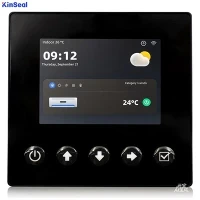


In the field of industrial automation, PLC industrial smart gateways and DTUs (Data Transfer Units) are two common communication devices, each playing a vital role in data acquisition, transmission, and control command issuance. However, these two devices exhibit significant differences in functionality, characteristics, and applications. This article will conduct a detailed comparison of PLC industrial smart gateways and DTUs from multiple perspectives, aiming to provide readers with a clear understanding and basis for selection.
I. Definition and Functionality
PLC Industrial Smart Gateway
A PLC industrial smart gateway is a device based on Programmable Logic Controller (PLC) technology, primarily used to connect and manage industrial automation equipment. It performs functions such as data acquisition, transmission, and control command issuance, serving as a critical component in industrial automation, smart manufacturing, and energy management. Specifically, the PLC Industrial Smart Gateway can obtain real-time information such as the working status and operating parameters of PLC devices and transmit it to monitoring centers or cloud platforms, enabling remote monitoring and control. Additionally, it can incorporate large-capacity storage space for storing historical and real-time data. Combined with cloud platforms, it achieves data storage and analysis functions, providing robust support for production optimization and decision-making within enterprises.
DTU
A DTU is a wireless terminal device specifically designed to convert serial port data into IP data or vice versa for transmission over wireless communication networks. Primarily used in meteorology, hydrology, water conservancy, and geology, it offers advantages such as rapid and flexible networking, short construction cycles, low cost, extensive network coverage, and robust security and confidentiality. The most fundamental application involves inserting a SIM card with activated GPRS functionality into the DTU. It then establishes a connection with the data processing center via the GPRS network to enable remote data transmission. During data transfer, the DTU can function as a SOCKET client, connecting to the server at the data processing center to achieve bidirectional communication.
II. Feature Comparison
Interface and Protocol Support
PLC industrial smart gateways offer extensive interface and protocol support, enabling connections to diverse devices such as sensors, PLCs, and industrial control equipment. They support multiple communication protocol conversions and data format transformations. This capability allows PLC industrial smart gateways to seamlessly facilitate data interoperability between different devices and systems, breaking down communication barriers. In contrast, DTUs primarily support conversion and transmission between serial ports and IP data, with relatively limited interface and protocol support.
Data Processing Capabilities
PLC industrial smart gateways possess robust data processing capabilities. They can process, analyze, and standardize collected data. Through edge computing functionality, they enable data acquisition, protocol parsing, and standardized data upload to cloud platforms. This empowers PLC industrial smart gateways to deliver richer data support and services to enterprises. In contrast, DTUs primarily handle transparent data transmission and exhibit relatively weaker capabilities in data processing and analysis.
Remote Management and Upgrades
PLC industrial smart gateways support remote management and upgrades. Users can monitor and control PLC devices in real-time via mobile apps or desktop software, performing operations such as power cycling, speed adjustment, and alarm configuration. This streamlines maintenance and management. DTUs, however, rely primarily on on-site configuration and management, offering limited support for remote management and upgrades.
Application Domains
PLC industrial smart gateways are widely used in industrial automation, smart manufacturing, energy management, and other fields, playing a crucial role in equipment monitoring, data acquisition, and production control. DTUs, on the other hand, are primarily applied in data acquisition and transmission for meteorology, hydrology, water conservancy, geology, and similar industries.
III. Summary
In summary, PLC industrial smart gateways and DTUs exhibit significant differences in definition, functionality, characteristics, and application domains. PLC industrial smart gateways possess robust capabilities for data acquisition, transmission, and control command issuance. They support multiple interfaces and protocol conversion, offer powerful data processing capabilities, and feature remote management and upgrade functions. These gateways are widely adopted in industrial automation and smart manufacturing sectors. In contrast, DTUs primarily perform data transparent transmission, offering advantages such as rapid and flexible networking, short construction cycles, and low costs. They are mainly applied in data acquisition and transmission within meteorology, hydrology, water conservancy, geology, and related industries. Therefore, selecting the appropriate device requires comprehensive consideration based on specific application scenarios and requirements.
Translated with DeepL.com (free version)