


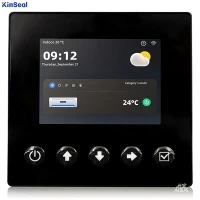


Human-Machine Interface (HMI) is an integral part of modern industrial automation, allowing operators to interact with machines and control systems in a convenient and intuitive way. When it comes to variable frequency drives (VFDs), the HMI plays a critical role in matching the device to the needs of the user.
Firstly, an effective HMI for a VFD should provide a clear and concise view of all operating parameters, such as speed, torque, current, and fault codes. This information should be presented in a user-friendly way, with clear icons, graphics, and data displays that allow operators to quickly diagnose issues and adjust settings as needed.
Secondly, the HMI should support various modes of operation, such as manual, automatic, and remote control, to meet the diverse needs of different applications. For instance, some applications may require precise control of motor speed or torque, while others may prioritize energy efficiency or system stability.
Thirdly, the HMI should be customizable to suit the specific needs of each user or process. This could involve creating custom screens, configuring alarms and notifications, or integrating with other control systems and data networks.
By providing an optimal HMI, VFD manufacturers can make their products more user-friendly, efficient, and reliable, which ultimately benefits both operators and businesses. The interface between the operator and the VFD is an important aspect of industrial automation and with the right HMI, it can be made simple and intuitive.
