


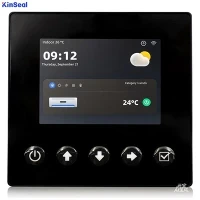


Industrial control computers are crucial devices in the field of industrial automation, playing a vital role in various industrial production processes.
1.PLC (Programmable Logic Controller)
PLCs are control devices widely used in industrial automation. They feature high reliability, flexibility, and ease of programming. The primary functions of PLCs include:
- Logic Control: PLCs can perform various logical operations such as AND, OR, and NOT to control industrial equipment.
- Sequential Control: PLCs can control equipment workflows according to predetermined sequences.
- Timing Control: PLCs can set timers to implement scheduled control of equipment.
- Data Processing: PLCs can collect, process, and store data.
- Communication Capabilities: PLCs can communicate with other devices or systems to enable data exchange and remote control.
PLCs are widely used in manufacturing, power generation, petrochemicals, metallurgy, transportation, and other fields.
2. DCS (Distributed Control System)
A DCS is a highly integrated control system that distributes multiple control nodes throughout the production site. It enables centralized data management and control through a communication network. Key functions of a DCS include:
- Centralized Monitoring: DCS enables real-time monitoring of the entire production process, enhancing efficiency and safety.
- Distributed Control: DCS distributes control tasks to different nodes, achieving decentralized control.
- Data Processing: DCS processes, analyzes, and stores collected data.
- Communication Capabilities: DCS possesses robust communication functions, enabling data exchange with other systems and equipment.
- Human-Machine Interface: DCS typically features an intuitive human-machine interface for convenient operator control and monitoring.
DCS finds extensive application in industries such as petroleum, chemical, power generation, metallurgy, and pharmaceuticals.
3.IPC (Industrial Personal Computer)
An IPC is an industrial control device based on personal computer technology, characterized by high performance, multifunctionality, and easy expandability. Its primary functions include:
- Data Processing: IPCs can perform complex data processing and analysis to meet diverse industrial application requirements.
- Graphical Display: IPCs can visualize diverse data and images during production processes, facilitating monitoring by operators.
- Human-Machine Interaction: IPCs enable interaction with operators, enhancing operational convenience and accuracy.
- Communication Capabilities: IPCs feature extensive communication interfaces for interfacing with other devices and systems.
- Expandability: IPCs support hardware and software expansion as needed to accommodate different application requirements.
IPCs are widely deployed across manufacturing, power generation, transportation, environmental protection, and other sectors.
4.CNC (Computer Numerical Control)
CNC is a computer system used to control machine tools and other processing equipment. Its primary functions include:
- Digital Control: CNC enables precise control of machine tools based on pre-set programs, achieving automated machining.
- Program Editing: CNC systems enable the editing and storage of machining programs for convenient reuse and modification.
- Tool Management: CNC facilitates automatic tool changing and management, enhancing machining efficiency.
- Fault Diagnosis: CNC incorporates fault diagnosis capabilities to promptly detect and address equipment malfunctions.
- Communication Functionality: CNC systems can communicate with other devices and systems to enable data exchange and remote control.
CNC is widely applied in industries such as mechanical manufacturing, automotive, aerospace, and mold making.
5. SCADA (Supervisory Control and Data Acquisition System)
SCADA is a system designed for real-time monitoring and data acquisition, widely used in industries such as manufacturing, energy, and transportation. Its primary functions include:
- Real-time Monitoring: SCADA displays the operational status of equipment and systems in real time, facilitating monitoring by operators.
- Data Acquisition: SCADA collects data from various sensors and devices, supporting data analysis and decision-making.
- Alarm Functionality: SCADA sets alarm thresholds to trigger alerts promptly when equipment or systems encounter anomalies.
- Report Generation: SCADA generates diverse reports to facilitate data analysis and decision-making for management personnel.
- Communication Capabilities: SCADA possesses robust communication capabilities, enabling seamless data exchange with other systems and devices.
6.HMI (Human-Machine Interface)
HMI is a device used to facilitate human-machine interaction, widely applied in industrial automation. Its primary functions include:
- Display Function: HMI displays the operational status, data, and images of equipment and systems.
- Control Function: HMI enables both manual and automatic control of equipment.
- Alarm Function: HMI displays alarm information for equipment and systems, alerting operators to take action.
- Data Logging: HMI records operational data from equipment and systems, facilitating data analysis.
- User Interface: HMI features an intuitive user interface, simplifying operation and monitoring for personnel.
7.RTU (Remote Terminal Unit)
An RTU is a device used for remote monitoring and control, widely applied in industries such as power, oil, and natural gas. The primary functions of an RTU include:
- Data Acquisition: RTUs collect data from various sensors and equipment to support remote monitoring.
- Control Functions: RTUs enable remote control of equipment, enhancing production efficiency and safety.
- Communication Capabilities: RTUs possess robust communication capabilities to facilitate data exchange with other systems and devices.
- Self-Diagnostic Functions: RTUs feature self-diagnostic capabilities to promptly detect and address equipment failures.
- Protective Functions: RTUs offer waterproofing, dustproofing, and corrosion resistance.